
Table of Contents
- 1. Choose Footwear With Proper Arch Support
- 2. How to Stop Feet From Hurting in Heels With Foot Comfort Spray
- 3. Best Insoles for Standing All Day
- 4. Foot Pain Relief Exercises and Stretching Routines
- 5. Compression Socks and Elevation Techniques
- 6. Recovery Methods: Massage, Soaks, and Rest
- 7. Workplace Ergonomics and Break Strategies
- Conclusion
- Frequently Asked Questions
Last Updated: September 21, 2026
When your job keeps you on your feet all day, or when you've committed to wearing heels for a wedding, event, or night out, foot pain can derail your comfort and confidence. The good news: the 7 best foot pain solutions for standing all day aren't complicated, and many work together to create lasting relief. Still Standing® Spray has helped countless people discover that managing foot pain doesn't mean sacrificing style or spending hours off your feet.

This guide covers proven strategies to reduce foot pain, prevent swelling, and keep you comfortable whether you're standing for work or dressed to the nines. We'll walk you through footwear choices, compression techniques, targeted exercises, ergonomic adjustments, and recovery methods that actually work.
1. Choose Footwear With Proper Arch Support
The foundation of foot pain prevention starts with your shoes. Proper arch support distributes your weight evenly across your foot, reducing strain on the plantar fascia and metatarsal bones. Without it, your feet absorb shock unevenly, leading to pain, inflammation, and fatigue.
Look for shoes with:
- A firm heel counter that stabilizes your ankle
- Cushioning in the ball of the foot where pressure concentrates
- A slight heel (1 to 2 inches) that reduces strain on the Achilles tendon
- Breathable material to minimize swelling and heat buildup
For professional settings, quality leather flats or low block heels with built-in arch support outperform thin soles. For standing jobs like retail or hospitality, athletic shoes or work clogs with memory foam insoles provide the best shock absorption. Even if you love heels, alternating between supportive and stylish shoes throughout the week gives your feet recovery time.
2. How to Stop Feet From Hurting in Heels With Foot Comfort Spray
If you're committed to wearing heels, for work, weddings, or special events, a non-numbing foot comfort spray offers targeted relief without the risks of numbing agents. Still Standing® Spray combines cooling menthol with plant-derived anti-inflammatory ingredients to reduce swelling and discomfort while you wear your shoes.

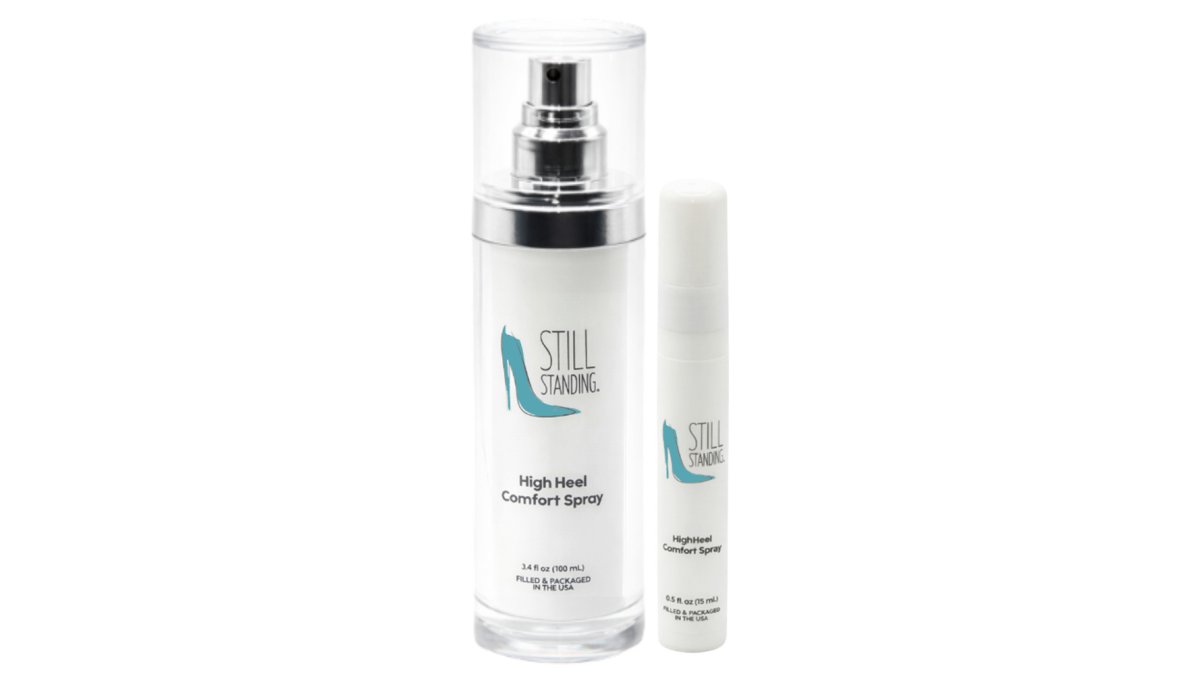
The key advantage of a non-numbing formula is that you maintain full sensation in your feet. You can feel when your shoes fit properly, notice if circulation is being cut off, and catch problems before they become injuries. Many people worry that without numbness, pain relief won't work, but that's a misconception. The cooling and anti-inflammatory action reduces the underlying inflammation causing pain, rather than masking sensation.
Still Standing® Spray works best when applied before putting on your heels, giving the formula time to absorb and begin reducing swelling. The portable 0.5 fl oz bottle fits in a clutch or pocket, so you can reapply throughout the day if needed. For extended wear, like a full wedding day or long event, many users pair the large 3.4 fl oz bottle for the initial application with a mini bottle for touch-ups.
3. Best Insoles for Standing All Day
Insoles designed for standing work by redistributing pressure across your entire foot, reducing the concentrated load on your heels and balls of your feet. The best insoles for standing all day combine arch support with shock-absorbing cushioning.
Effective insole features include:
- Orthotic arch support that matches your foot's natural curve
- Metatarsal pads that cushion the ball of your foot
- Gel or foam cushioning in high-pressure zones
- Moisture-wicking materials to reduce swelling from heat and perspiration
Insoles work best in shoes with enough depth to accommodate them without cramping your toes. If you wear heels regularly, look for slim, low-profile insoles designed specifically for dress shoes. For work shoes or casual wear, thicker insoles with more cushioning provide better long-term support.
A common mistake is buying generic insoles and expecting them to solve all foot pain. The truth is more nuanced: insoles help, but they're most effective when paired with proper footwear selection, regular stretching, and recovery techniques. Think of insoles as one part of a complete foot care strategy, not a standalone solution.
4. Foot Pain Relief Exercises and Stretching Routines
Stretching and targeted exercises improve flexibility and reduce muscle tension that contributes to foot pain. Tight calf muscles, in particular, pull on the plantar fascia and increase heel pain (pubmed.ncbi.nlm.nih.gov). A consistent stretching routine takes just 10 minutes daily.
Effective stretches for foot pain relief:
Still Standing® Spray - Large →
Calf Stretch (hold 30 seconds, repeat 3 times per leg): Stand facing a wall. Place one foot forward, one back. Keep your back heel on the ground and lean forward until you feel a stretch in your calf. This reduces tension on the plantar fascia.
Plantar Fascia Stretch (hold 30 seconds, repeat 3 times per foot): Sit in a chair. Cross one foot over your opposite knee. Using your hand, gently pull your toes back toward your shin. You'll feel a stretch along the bottom of your foot. Maintaining this flexibility is essential for overall foot health, though you should also consider that treating foot skin issues remains a vital component of long-term comfort when you are on your feet for extended periods.
Toe Flexion Exercise (10 repetitions per foot): Curl your toes downward as if gripping a towel, then straighten them.
5. Compression Socks and Elevation Techniques
Compression socks improve circulation and reduce swelling by gently squeezing your calves and feet. They work by pushing fluid back up toward your heart, preventing the pooling of blood and fluid that causes edema and discomfort.
Compression socks are most effective when:
- Worn during the day while standing or after long periods on your feet
- Paired with foot elevation in the evening
- Used consistently, benefits build over time
6. Recovery Methods: Massage, Soaks, and Rest
Evening recovery routines are where real healing happens. After a long day on your feet, your muscles are fatigued and your feet are likely swollen. Active recovery techniques reduce inflammation and prepare your feet for the next day.
7. Workplace Ergonomics and Break Strategies
If your job requires standing all day, workplace ergonomics can cut foot pain significantly. Small adjustments to your environment and routine create big improvements in comfort.
Ergonomic strategies for standing jobs:
- Anti-fatigue mats: If you stand in one place (cashier, reception desk, assembly line), an anti-fatigue mat reduces the impact on your feet and encourages subtle muscle engagement that improves circulation.
- Footrest or stool: Alternating which foot bears your weight every 15-20 minutes prevents uneven muscle fatigue.
- Proper footwear: Wear shoes with cushioning and arch support, not fashion shoes that look good but offer no support.
- Frequent position changes: Shift your weight, step side to side, or walk short distances every 30 minutes. Movement prevents blood pooling and reduces stiffness.
- Scheduled breaks: Even 5 minutes of sitting or lying down with your feet elevated every 2-3 hours makes a measurable difference.
Conclusion
The 7 best foot pain solutions for standing all day work best together. Start with proper footwear and arch support, add targeted stretching and recovery techniques, and use compression or elevation in the evening. For those committed to wearing heels, Still Standing® Spray provides real relief with its non-numbing formula that reduces swelling while keeping you aware and safe.
| Solution | Best For | Time Required | Frequency |
|---|---|---|---|
| Proper arch support footwear | All-day standing, preventing pain | Ongoing | Daily wear |
| Foot comfort spray | Heel wear, swelling reduction | 2-3 minutes | Before events or as needed |
| Supportive insoles | Work shoes, extended standing | One-time investment | Daily wear |
| Stretching routine | Flexibility, muscle tension | 10 minutes | Daily, especially evening |
| Compression socks | Circulation, edema prevention | Ongoing | During day or after work |
| Epsom salt soaks | Inflammation, muscle relaxation | 15-20 minutes | 3-4 times weekly |
| Workplace ergonomics | Job-related foot pain | Ongoing adjustments | Throughout workday |
Frequently Asked Questions
How can I stop my feet from hurting after standing all day?
A combination of strategies works best: wear shoes with proper arch support and cushioning, take frequent breaks to elevate your feet, perform stretching exercises for your calves and plantar fascia, and use a foot comfort spray before extended wear. Compression socks improve circulation and reduce swelling, while massage and Epsom salt soaks aid recovery. The key is addressing both prevention during the day and recovery afterward.
What's the difference between a numbing product and a non-numbing foot pain solution?
Numbing products temporarily block sensation, which can mask pain but may cause you to move in ways that worsen injury, and increases fall risk in heels. Non-numbing solutions like Still Standing® Spray use anti-inflammatory ingredients and cooling menthol to reduce the actual swelling and discomfort causing pain, while letting you feel your feet normally. This approach is safer and addresses the root cause rather than just hiding symptoms.
Are insoles or foot sprays more effective for heel pain relief?
Both serve different purposes. Insoles provide structural support and shock absorption throughout the day, making them ideal for standing jobs or frequent heel wear. Foot sprays like Still Standing® Spray work by reducing inflammation and swelling before or during events, offering targeted relief without altering your shoe fit. Many people use both: insoles for daily support and a spray for special occasions or extended wear in heels.
How long does a bottle of foot comfort spray last?
A 3.4 fl oz bottle (Still Standing® Spray Large) typically lasts several weeks with regular use, as you apply it once before wearing heels and may reapply mid-event if needed. The 0.5 fl oz mini bottle is designed for touch-ups throughout the day or night. Frequency depends on how often you wear heels and the duration of wear, so a daily heel wearer will use it faster than someone wearing heels occasionally.