
Table of Contents
- Why Gel Pads for High Heels Fall Short
- Ball of Foot Cushions for Heels: Foam, Fabric, and Metatarsal Options
- Foam Inserts for High Heels: PORON, Memory Foam, and Latex
- High Heel Anti-Slip Inserts and Heel Grips
- How to Make High Heels More Comfortable Without Inserts
- Matching Alternatives to Shoe Type: Pumps, Wedges, and Open-Toe
- Durability, Cleaning, and Replacement Cycles
- Conclusion: Choosing the Right Alternative for Your Heels
- Frequently Asked Questions
Last Updated: October 15, 2026
Why Gel Pads for High Heels Fall Short
Gel pads for high heels solve one problem and create two more. They cushion the ball of the foot but add volume inside a shoe with no spare room, pushing the foot up and forward, a tighter fit, more sliding, new pressure points.
This guide from Still Standing® Spray covers the alternatives that hold up, foam and fabric cushions, metatarsal supports, heel grips, anti-slip inserts, and non-insert strategies, by shoe type, material, durability, and problem solved.

Common Complaints About Gel Cushions
The most frequent complaint is migration: under the load of walking, a gel pad slides forward, bunches under the toes, or rolls to one side.
The second is heat: gel retains warmth and does not breathe, so feet sweat, and sweat plus friction produces blisters.
Gel is a short-term fix for a problem that usually needs a structural answer.
Ball of Foot Cushions for Heels: Foam, Fabric, and Metatarsal Options
Ball of foot cushions for heels come in three types: foam pads that absorb impact, fabric-topped pads that manage friction, and metatarsal pads that sit behind the ball to redistribute load.
- Foam cushions: Best for impact pain under the ball of the foot. Closed-cell foams hold their shape longer than gel.
- Fabric-topped cushions: Best for friction and blister prevention. The textile surface lets the foot glide instead of sticking.
- Metatarsal pads: Best for burning or numbness in the ball of the foot. They sit further back and lift the metatarsal heads slightly, spreading weight.
A common mistake is placing a metatarsal pad directly under the ball of the foot. It belongs just behind it; placed wrong, it concentrates pressure instead of relieving it.
Foam Inserts for High Heels: PORON, Memory Foam, and Latex
Foam inserts for high heels outperform gel on durability because foam recovers its shape rather than flowing away from load.
Memory foam conforms to the foot but retains heat and rebounds slowly, some wearers find it mushy in a heel.
Latex is the most resilient and least heat-sensitive, though heavier and firmer than people expect.
Material Comparison: Durability and Skin Sensitivity
| Material | Durability | Breathability | Skin Sensitivity | Best For |
|---|---|---|---|---|
| Gel | Low, compresses | Poor | Low risk | Short events |
| PORON foam | High | Moderate | Low risk | Daily wear |
| Memory foam | Moderate | Poor | Low risk | Occasional use |
| Latex | High | Moderate | Possible reaction | All-day wear |
| Fabric-topped | Varies by base | Good | Lowest risk | Sensitive skin |
If you have sensitive skin, fabric-topped inserts are the safer start: they keep cushioning off direct skin contact and reduce the sweat-and-friction cycle. Adhesives are the other variable, some react to the glue before the foam.
High Heel Anti-Slip Inserts and Heel Grips
High heel anti-slip inserts address the problem gel pads make worse: forward sliding. When your foot slides forward, your toes jam into the toe box and the ball of the foot takes load it was never meant to carry. The fix is stopping the foot from moving, not adding cushioning.
Why Feet Slide Forward in Heels
A heel lifts the heel above the toes, tilting the foot into a downhill slope, so gravity pushes it toward the toe box with every step. If the shoe is too long, too wide at the heel, or slick-lined, nothing holds the foot back, and the ball of the foot carries load it was never designed to carry.
Heel Grips vs. Anti-Slip Inserts
These are two different products solving two different problems, and buying the wrong one is the most common mistake.
- Heel grips are small pads, suede, foam, or silicone, that attach to the inside back of the heel. They take up slack and stop the heel from lifting out of the shoe with each step. They work only when the shoe is genuinely too long or too wide at the heel.
- Anti-slip inserts are thin, textured pads placed under the ball of the foot or across the forefoot. They create friction between the foot and the shoe so the foot stays put instead of sliding forward. They work when the shoe fits in length but the lining is slick.
If the shoe fits everywhere except the ball, a heel grip will not fix the sliding, because the sliding starts at the forefoot. If the shoe is loose at the heel, an anti-slip insert under the ball will not stop the heel from lifting.
Heel Grip Materials Compared
| Material | Grip | Bulk | Feel | Best For |
|---|---|---|---|---|
| Suede | Moderate | Very low | Soft, breathable | Snug shoes, sensitive skin |
| Foam | Moderate | Moderate | Cushioned | Shoes slightly too large |
| Silicone | High | Low | Clammy, non-breathable | Slick linings, leather interiors |
| Leather | Moderate | Low | Firm, durable | Long-wear, structured heels |
Suede is the safest default: thin, breathable, least likely to irritate skin. Foam adds volume, helpful in a half-size-too-big shoe, counterproductive in one that fits. Silicone grips hard but does not breathe, so feet sweat, and sweat plus friction produces blisters. Leather lasts longer than suede but feels firmer.
Placement and Fit Troubleshooting
Placement decides whether a grip helps or hurts. A heel grip belongs at the top of the heel counter, where the heel meets the shoe, not near the sole.
If a shoe fits at the heel but slips at the ball, the fix is an anti-slip insert under the ball, not a heel grip.
When Anti-Slip Inserts Are the Wrong Fix
Anti-slip inserts do not fix a shoe that is too small, adding anything under the ball pushes the foot forward and worsens toe crowding. They also do not fix a shoe that is too wide overall, which is a fit problem, not a friction problem. And they do not replace a metatarsal pad when the pain is burning or numbness rather than sliding.
How to Make High Heels More Comfortable Without Inserts
Knowing how to make high heels more comfortable without inserts comes down to changing the shoe-foot interface rather than adding material inside it.
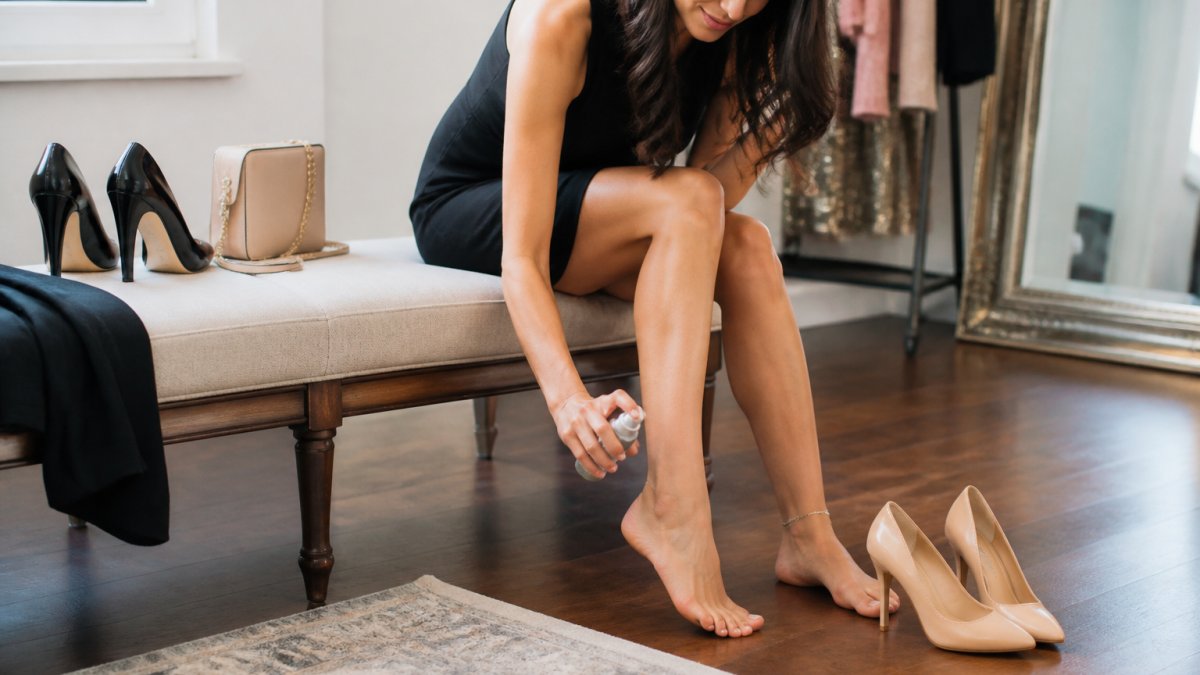
At Still Standing® Spray, we built our Foot Comfort Spray around cooling menthol and plant-derived ingredients rather than numbing agents, so you keep full sensation while the formula helps soothe and refresh tired skin.
Sprays, Taping, and Fit Adjustments
Sprays are the fastest option and the only one that adds zero volume inside the shoe.
Foot Comfort Spray for Ultimate High Heels →
Taping with paper or athletic tape reduces friction on specific hot spots, most often the heel and the base of the toes. Use thin tape and smooth it flat; wrinkles create new pressure points.
Fit adjustments are the highest-use change: a gel heel insert at the back, a ball-of-foot pad that lifts the foot slightly, or a repair shop stretching the toe box can each remove a pressure point permanently.
Matching Alternatives to Shoe Type: Pumps, Wedges, and Open-Toe
Compatibility by shoe construction decides which alternative works, a pad that fits a closed pump can be visible in an open-toe sandal and useless in a wedge.
| Shoe Type | Best Alternative | Why It Works |
|---|---|---|
| Closed pumps | Foam or PORON ball-of-foot cushion | Hidden, absorbs impact |
| Wedges | Heel grips plus low-profile foam | Wedge heel cup is shallow |
| Open-toe | Spray only, or clear fabric cushion | No visible pad edge |
| Slingbacks | Suede heel grips | Stops heel lift at the strap |
| Pointed toes | Metatarsal pad placed behind ball | Relieves toe-box pressure |
For open-toe shoes, most inserts will show; a spray or a clear, fabric-topped cushion cut to size is realistic. Pumps offer the most freedom, almost any thin foam cushion stays hidden.
Durability, Cleaning, and Replacement Cycles
Durability is where the non-gel alternatives separate, and where cleaning habits decide how long anything lasts. Foam and latex typically outlast gel by a wide margin because they recover rather than flow, but the gap between a well-cared-for insert and a neglected one is just as large.
Realistic Lifespans by Material
Lifespan depends less on the material label than on hours worn per week and wearer weight. The ranges below assume daily wear of two to four hours.
| Material | Typical Lifespan | What Ends Its Life |
|---|---|---|
| Gel | 4-8 weeks | Compression, migration, loss of rebound |
| Memory foam | 2-4 months | Heat retention, slow rebound, odor |
| PORON foam | 4-8 months | Surface wear, adhesive failure |
| Latex | 6-12 months | Cracking at flex points |
| Suede heel grips | 2-4 months | Matting, loss of grip |
| Silicone heel grips | 3-6 months | Stretching, clamminess, residue |
These are ranges, not guarantees: inserts worn once a week last far longer than the same pair worn daily, and a heavier wearer compresses any foam faster.
Cleaning Washable vs. Disposable Inserts
Washable inserts should be cleaned every week or two with mild soap and warm water, then dried completely away from direct heat.
Disposable adhesive pads are not designed to be washed.
Fabric-topped inserts need the most care because the textile holds sweat and odor; hand wash with mild soap every few wears.
Replacement Triggers
Replace inserts when they stop springing back, the top surface goes shiny and slick, or the adhesive fails. Sprays last according to use: a full-size bottle covers the application before shoes go on, and a travel size handles touch-ups.

A simple test: press the insert with your thumb. If it stays compressed instead of rebounding, the cushioning is gone even if it looks fine.
Storage and Rotation
Storing inserts inside their shoes keeps them from losing shape and easy to find. Rotating two pairs through a week extends the life of both, since each gets time to dry and rebound. Do not store inserts in a hot car or damp bathroom, heat degrades foam and moisture encourages odor and mold.
When to Replace the Shoe, Not the Insert
Sometimes the insert is not the problem. If a shoe has lost its structure, a collapsed heel counter, stretched upper, or worn sole, no insert will restore comfort. A repair shop can sometimes replace a heel counter or stretch a tight toe box, but a shoe that has lost its shape will keep hurting no matter what you put inside it.
Conclusion: Choosing the Right Alternative for Your Heels
The pattern is consistent: gel pads are the default, not the best answer, and the alternative that works is matched to your specific failure point.
When you want comfort without adding anything inside the shoe, Still Standing® Spray offers a non-numbing, cooling menthol formula made without numbing agents, in a TSA-friendly 3.4 fl oz bottle for the first application and a 0.5 fl oz travel size for touch-ups.
Get started with Still Standing® Spray and wear the heels you love from your first step to your last.
Frequently Asked Questions
What can I use instead of gel pads in high heels?
Foam inserts, fabric-covered ball-of-foot cushions, and anti-slip heel grips are the most common alternatives. Foam and PORON inserts distribute pressure more evenly than gel and hold their shape longer. Fabric-topped cushions reduce friction and sweating. Anti-slip grips stop your foot from sliding forward, which is a major cause of toe pain. A non-numbing foot comfort spray like Still Standing® also works as a standalone option or alongside inserts for extended wear.
Do foam or felt pads work better than gel pads in heels?
Foam and felt pads outperform gel in several ways. They absorb moisture, which gel does not, and they stay put inside the shoe better because they compress and grip the insole. PORON foam, in particular, is known for returning to its original shape after compression, so it keeps cushioning over hours. Gel pads can shift, feel slippery, and lose their cushioning faster. For long events or daily wear, foam-based ball-of-foot cushions for heels are usually the more reliable pick.
How do you make high heels more comfortable for a long event?
Start with fit. Add a foam or fabric ball-of-foot cushion to reduce pressure on the metatarsal area, and heel grips to stop forward sliding. Break the shoes in for a few days before the event. Apply a non-numbing foot comfort spray before you put the shoes on; Still Standing® uses a cooling menthol formula without numbing agents, so you keep natural foot sensation. Bring a travel-size bottle for touch-ups. Rotate to a lower heel or flats during breaks when possible.
What can I put in high heels to stop my feet from sliding forward?
Heel grips and anti-slip inserts are the most direct fix. Heel grips are adhesive pads that line the back of the shoe and hold your heel in place, preventing the forward slide that jams your toes. For open-toe or strappy styles, look for clear or low-profile anti-slip strips that fit along the insole. Ball-of-foot cushions also help by filling the gap under the metatarsals and reducing the downward angle that pushes your foot forward.
Are ball-of-foot cushions or full-length insoles better for heels?
Ball-of-foot cushions are usually the better choice for high heels because they target the area that takes the most pressure and fit inside the narrow toe box without crowding. Full-length insoles add bulk, can push your heel out of the shoe, and often do not fit the shape of a pump or wedge. If you need arch support, look for a slim 3/4 insole designed specifically for heels rather than a full-length option meant for flats or sneakers.