
Table of Contents
- Why High Heels Hurt and What to Look for in Alternatives
- Comfortable Alternatives to High Heels for Every Occasion
- Comfortable Wedding Shoes That Still Look Formal
- Best Shoes for Standing All Day at Work or Events
- Shoes for Heel Pain: When to Choose Support Over Style
- How to Make Any Shoe More Comfortable
- Conclusion: Finding Your Best Alternative to Painful High Heels
- Frequently Asked Questions
Last Updated: October 7, 2026
Why High Heels Hurt and What to Look for in Alternatives
The best alternatives to painful high heels solve the problem at the source: they keep your foot stable and supported instead of forcing it into an unnatural angle. A heel above two inches shifts most of your weight onto the ball of the foot, which is why burning, swelling, and aching set in after a few hours.

You do not have to give up style to stay comfortable. Fashionable alternatives range from dressy flats to lower, more stable heels; the trick is knowing which features reduce pain.
Fit, Support, and Cushioning Criteria
Start with fit, because no amount of cushioning fixes a shoe that is the wrong shape for your foot. Look for a toe box wide enough to let your toes spread, a heel counter that grips without rubbing, and a sole with enough flex to move with your stride.
Then check support and cushioning:
- Arch support that follows your foot's natural curve
- Cushioned insoles that absorb impact at the ball of the foot and heel
- A stable base wide enough to prevent wobbling
Comfortable Alternatives to High Heels for Every Occasion
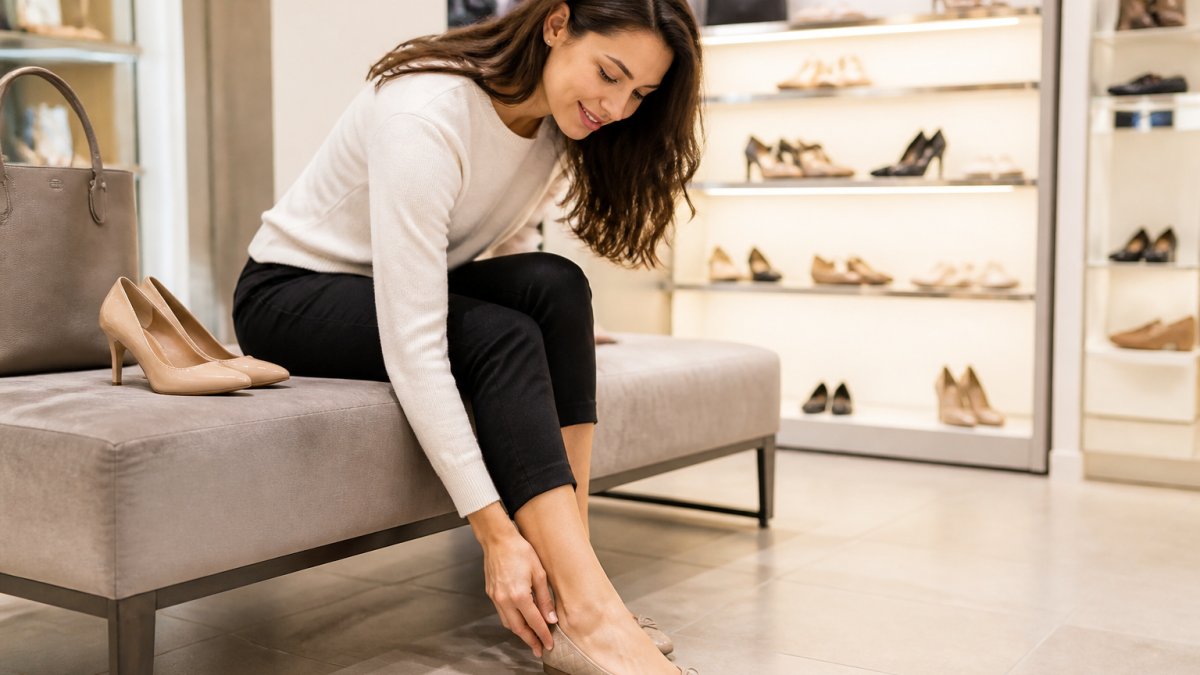
Comfortable alternatives to high heels fall into a few reliable categories, each suited to a different dress code, foot shape, and event length.
Match the Shoe to the Occasion
| Occasion | Dress Code | Best Alternatives | Why It Works |
|---|---|---|---|
| Black-tie wedding | Formal | Pointed-toe flat, ankle-strap flat, low block heel (1-2 in) | Keeps a polished silhouette without a steep pitch |
| Cocktail party | Semi-formal | Metallic or glitter flat, kitten-heel slingback, wedge | Reflective finishes read dressy under low light |
| Office or courtroom | Business professional | Pointed-toe flat, low block heel, flat loafer | Closed toe and clean lines meet most dress codes |
| Outdoor or barn event | Casual dressy | Flat ankle boot, cowboy boot, wedge | Wide base handles grass, gravel, and uneven ground |
| All-day conference | Business casual | Wedge sneaker, cushioned flat, low block heel | Cushioning and stability for eight-plus hours |
| Travel day | Casual | Wedge sneaker, slip-on flat, flat boot | Easy on and off, packs flat, walks well |
Flats and Ballet Flats for Dressy Events
Ballet flats are the classic swap for a formal pump. A pointed-toe flat reads dressier than a rounded one, and an ankle-strap flat adds lift and security. For evening events, glitter or metallic finishes hold their own against any heel.
The trade-off is real: flats offer little arch support, so if you have high arches or flat feet, add a cushioned insert. Look for a slightly thicker sole and a removable insole.
Boots and Wedges for Cooler Weather
When the temperature drops, boots and wedges give you height with far more stability. A flat ankle boot or cowboy boot covers the foot and supports the ankle, which matters on uneven ground.
Block heels deserve a mention too: a thick, square block heel is far more stable than a stiletto, and platform heels raise the front of the foot so the heel-to-toe drop is gentler.
Fit Notes for Different Foot Shapes
A shoe that works for one foot can fail another. Keep these patterns in mind:
- Wide feet or bunions: Look for a rounded or square toe box and soft, stretchy uppers. Pointed toes can press on a bunion, so size up or choose a wider width when available.
- High arches: Flats and ballet styles offer little support. Add a cushioned insert with a raised arch, or choose a low block heel with a contoured footbed.
- Flat feet: Look for a firmer midsole and a heel counter that holds the foot in place. Too much flexibility can let the arch collapse.
Comfort Trade-Offs at a Glance
| Alternative | Best For | Comfort Strength | Watch Out For |
|---|---|---|---|
| Ballet flats | Dressy events, office | Easy all-day wear | Minimal arch support |
| Pointed-toe flats | Formal occasions | Polished look | Narrow toe box |
| Flat ankle boots | Cooler weather | Ankle support | Can feel heavy |
| Cowboy boots | Casual, outdoor events | Stability, coverage | Stiff break-in |
| Block heels | Work, weddings | Stable base | Still a heel |
| Wedges | Long events | Even weight spread | Can feel clunky |
| Wedge sneakers | Travel, casual days | Cushioning | Less formal |
| Lower heels (1-2 in) | Any dress code | Natural foot angle | Height trade-off |
Materials and Budget Considerations
Material affects comfort as much as shape. Soft leather and knit uppers mold to the foot, while patent and stiff synthetics stay rigid, and breathable linings reduce heat and moisture that cause blisters. You do not need to spend the most to get support: a mid-range flat with a removable insole and firm heel counter often outperforms a designer pair with a paper-thin sole.
Comfortable Wedding Shoes That Still Look Formal
Comfortable wedding shoes are the ones you can stand, walk, and dance in for six or more hours, not just the ones that photograph well. The ceremony is short, but the day is long.
This is where a foot comfort spray earns its place in the clutch. Our Foot Comfort Spray for Ultimate High Heels uses a cooling menthol formula without numbing agents, so you keep natural sensation in your feet while staying comfortable.
Best Shoes for Standing All Day at Work or Events
The best shoes for standing all day share three traits: a cushioned footbed, a stable sole, and a fit that does not pinch.
For office and legal environments where a heel is expected, a low block heel or pointed-toe flat keeps the look professional while cutting strain.
American Podiatric Medical Association guidance on foot health notes that proper footwear and regular foot care support overall foot health, which matters when you spend most of the day upright.
Shoes for Heel Pain: When to Choose Support Over Style
Shoes for heel pain should prioritize cushioning, arch support, and a low, stable heel, because the wrong shoe can make an existing problem worse. Heel pain has many causes, and footwear is only one factor. The right pair supports the foot without forcing it into an unnatural angle, and fits well enough that you are not compensating with your gait.
Foot Comfort Spray for Ultimate High Heels →
What to Look For in a Supportive Shoe
When heel pain is the issue, evaluate a shoe on these criteria:
- Heel height: A low, stable heel of one to two inches takes tension off the Achilles tendon and calf, which is often helpful for heel pain. A completely flat, thin sole can be just as aggravating as a stiletto.
- Heel counter: The back of the shoe should be firm and grip the heel without rubbing. A floppy heel counter lets the foot slide, which irritates the heel with every step.
- Midsole cushioning: Look for a shock-absorbing layer under the heel. A removable insole lets you add an orthotic or a heel cup if a clinician recommends one.
Match the Shoe to the Problem
Different heel-pain patterns respond to different features. A clinician can confirm the cause, but these general patterns are common:
| Pattern | Common Feature | Shoe Strategy |
|---|---|---|
| Pain worst with first steps in the morning | Often linked to plantar fascia strain | Cushioned heel, arch support, low heel height |
| Pain at the back of the heel | Often linked to Achilles tendon strain | Slight heel lift, soft heel counter, avoid flat, thin soles |
| Pain along the bottom of the heel | Often linked to fat-pad thinning | Extra heel cushioning, shock-absorbing midsole |
| Pain with numbness or tingling | May involve nerve compression | Wide toe box, adjustable fit, see a clinician |
When to See a Professional
Footwear changes help everyday discomfort, but some signs warrant a visit to a podiatrist or another qualified clinician:
- Pain that is sharp, persistent, or worsening over days
- Swelling, redness, or warmth that does not settle with rest
- Numbness, tingling, or loss of sensation in the foot
If you have diabetes, circulatory problems, or neuropathy, treat any foot pain as a reason to check in with a clinician rather than self-treat.
Everyday Habits That Help
For everyday discomfort, the fix is usually simpler than people expect.
American Podiatric Medical Association guidance on foot health notes that proper footwear and regular foot care support overall foot health, which matters when you spend most of the day upright.
Cleveland Clinic overview of foot pain causes explains that footwear choices and foot mechanics both play a role in common foot pain, which is why fit and support matter as much as style.
Do not rely on numbing products that deaden sensation in your feet. Losing feeling while wearing heels raises your risk of a fall, especially on stairs or uneven pavement. A non-numbing option keeps you aware of your footing.
How to Make Any Shoe More Comfortable
You can make almost any shoe more comfortable with a few small adjustments. Try these before your next long event:
- Break shoes in at home for short periods over several days.
- Wear thick socks with tight shoes to gently stretch them.
- Add a cushioned insole or heel grip where you need it.
- Use a shoe stretcher for tight toe boxes.
- Apply a foot comfort spray before you put the shoes on.
- Keep blister patches and a travel-size spray in your bag.
- Switch shoes midway through a long day when you can.
Conclusion: Finding Your Best Alternative to Painful High Heels
The right alternative comes down to matching the shoe to the occasion and your foot, not to a single "best" pair. Flats, boots, wedges, and lower block heels each solve a different problem, and a comfort spray helps you get more hours out of the shoes you already love.
That is exactly what we built Still Standing® Spray to do. Our non-numbing cooling menthol formula is designed for high heels and dress shoes, comes in a portable, TSA-friendly bottle, and is backed by a 30-day money-back guarantee.
Frequently Asked Questions
What shoes can I wear instead of high heels?
You have several comfortable alternatives to high heels, including ballet flats, pointed-toe flats, loafers, low block heels, wedges, and dressy sneakers. For formal events, choose a pointed-toe flat in a metallic or satin finish. For work, a low block heel or supportive loafer works well. For casual outings, white leather sneakers or flat ankle boots offer both style and comfort. The best choice depends on the occasion, your outfit, and how long you'll be on your feet.
What are the most comfortable wedding shoes for brides and bridesmaids?
Comfortable wedding shoes balance style with support. Consider block heels (2-3 inches), wedge heels, or embellished flats with cushioned insoles. Look for shoes with ankle straps for stability and breathable materials like leather or satin. Test them for at least a week before the event and use a foot comfort spray like Still Standing® to help prevent pain during long hours of standing and dancing. Always break in new shoes with thick socks around the house first.
Are flats better for your feet than high heels?
Flats generally cause less strain than high heels because they keep your foot in a more natural position. However, not all flats are equal. Ballet flats with thin soles offer little arch support and can cause pain during long wear. Look for flats with cushioned footbeds, arch support, and a slightly thicker sole. Pointed-toe flats and ankle-strap flats can still look dressy for formal occasions. If you have heel pain or plantar fasciitis, choose supportive flats over thin-soled styles.
What dress shoes are comfortable for standing all day?
For all-day standing, choose dress shoes with a low heel (under 2 inches), a wide toe box, and cushioned insoles. Block heels, wedges, and loafers are good options. Oxfords and derby shoes in soft leather also work well for professional settings. Avoid thin-soled flats and stilettos. Add a foot comfort spray before putting on your shoes, and consider gel inserts or arch supports if you need extra cushioning. Rotate between two or three pairs to reduce pressure on the same spots.
Do platform shoes hurt less than high heels?
Platform shoes can hurt less than traditional high heels because the thick sole reduces the angle of your foot and distributes pressure more evenly. A platform heel of 3 inches with a 1-inch platform creates an effective heel height of 2 inches, which is easier on your feet. However, platforms are heavier and can cause ankle instability if the fit is loose. Choose platform styles with ankle straps and a wide, stable base for the best balance of comfort and style.