
Table of Contents
- Comfortable Heels vs Flats for Outdoor Weddings: The Core Trade-Off
- Quick Comparison: Heels vs Flats for an Outdoor Wedding
- Best Shoes for an Outdoor Wedding: A Decision Matrix by Surface and Activity
- Wedding Shoes for Grass: Heel Styles That Stay Stable on Uneven Ground
- How to Make Heels More Comfortable for a Full Wedding Day
- Wedding Shoe Insoles and Surface-Specific Accessories
- Fit, Support, and Foot-Health Factors for Brides and Guests
- Conclusion: Choosing Between Heels vs Flats for an Outdoor Wedding
- Frequently Asked Questions
Last Updated: October 13, 2026
Comfortable Heels vs Flats for Outdoor Weddings: The Core Trade-Off
The choice between comfortable heels vs flats for outdoor weddings comes down to one question: how much stability are you willing to trade for height and formal styling? At Still Standing® Spray, we hear this debate from brides, bridesmaids, and guests constantly, and the honest answer is that neither option wins everywhere.

Here is the part most guides skip: the surface matters more than the heel height. A two-inch block heel on packed gravel outperforms a flat ballet shoe on wet grass, because traction and sole width decide whether you stay upright.
Below, we break down the trade-offs by surface, activity, and event length, so you can pick the right pair for your venue instead of guessing.
Quick Comparison: Heels vs Flats for an Outdoor Wedding
Heels win on formality and posture; flats win on stability and all-day endurance. The right answer depends on your venue surface, how long you will be standing, and whether you plan to dance.
| Factor | Heels | Flats |
|---|---|---|
| Stability on uneven ground | Lower, unless block or wedge | Higher |
| Formality with a floor-length gown | Strong match | Can look casual |
| All-day wear and foot fatigue | More fatigue at height | Less fatigue |
| Dancing and long receptions | Needs support | Comfortable |
| Grass and sand performance | Poor in stilettos | Better grip |
| Best for | Ceremony, photos, short wear | Guests, dancing, long days |
A common mistake is treating this as a binary. Many brides wear a heel for the ceremony and photos, then switch to a lower heel or flat for the reception.
Best Shoes for an Outdoor Wedding: A Decision Matrix by Surface and Activity
Match the shoe to the surface first, then to the activity, then to how long you will actually be on your feet. This is the step most people reverse, and it is why so many outdoor wedding shoes fail by hour three.
Most guides stop at "wear wedges on grass." That advice breaks down the moment your venue mixes surfaces or your day runs long. The matrix below adds the two variables competitors skip: event duration and primary activity.
Step 1: Score your surface
Rank your venue's worst surface, not its best one. If you will cross grass to reach a stone patio, the grass sets your floor.
| Surface | What fails | What works | Why |
|---|---|---|---|
| Manicured lawn, dry | Stilettos (sink, tip) | Block heels, wedges, kitten heels, dressy flats | Firm turf holds a wide base without swallowing it |
| Long grass or soft ground | Stilettos, thin kitten heels | Wedges, flats with tread | Contact area decides whether you sink |
| Sand | Any heel narrower than a wedge | Flats, wedges | Point pressure digs in; wide base floats |
| Stone paths and patios | Smooth leather soles | Any heel with a textured sole | Traction, not height, prevents slips |
| Gravel | Stilettos, hard flat soles | Block heels, flats with lug or rubber tread | Loose stone rolls under a narrow or slick sole |
| Boardwalk or decking | Metal-tipped heels | Rubber-soled flats, wedges | Metal on wood is slick and marks the surface |
Step 2: Score your duration and activity
Comfort is a function of time on your feet, not heel height alone. Use these rough bands:
- Under 1 hour on feet (ceremony, photos): Almost any heel works if the surface allows it. This is the window for stilettos and higher heels.
- 1-3 hours (ceremony, cocktail hour, seated dinner): Block heels, kitten heels, or supportive flats. Plan a switch point.
- 3+ hours (full reception, dancing, standing mingling): Wedges, low block heels, or cushioned flats. This is where foot fatigue compounds.
Activity shifts the answer again. A guest who plans to dance for two hours needs more ankle stability and cushioning than a bride standing for a twenty-minute ceremony. Walking between a ceremony site and a reception tent adds distance most people forget to count.
Step 3: Read your row
Combine the two scores:
- Rough surface + long day: Wedges or cushioned flats. Skip heels above two inches.
- Rough surface + short ceremony: Block or kitten heels are fine; switch after photos.
- Hard surface + long day: Low block heels or supportive flats; stilettos only if you sit often.
Bride vs. guest: the matrix shifts
Brides often optimize for photos and a single walk down the aisle, then switch. Guests optimize for standing, mingling, and dancing across the full event, often with no backup pair and no place to change. If you are a guest, weight duration and surface more heavily than formality. If you are the bride, you can trade some all-day comfort for ceremony styling because you control when you switch.
Wedding Shoes for Grass: Heel Styles That Stay Stable on Uneven Ground
Wedges and block heels are the most stable heel styles for grass, because their wide base spreads your weight instead of punching into the turf. Kitten heels work for short stretches.
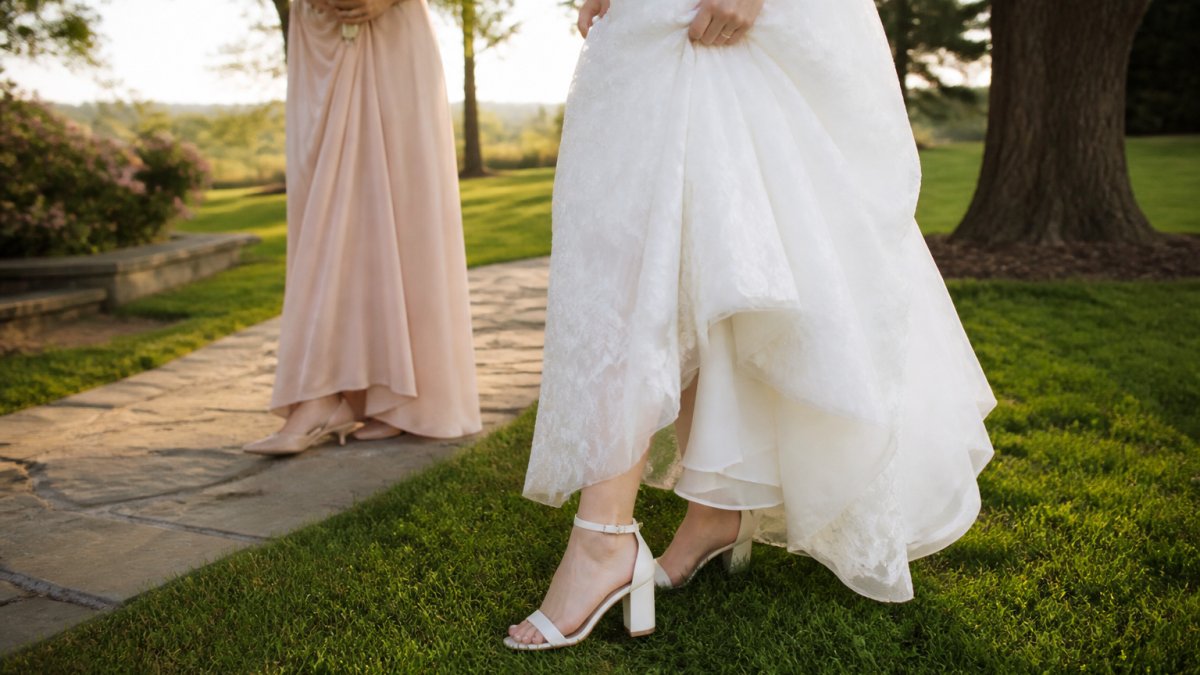
Here is how the main styles rank on uneven ground:
- Wedges: Best stability, widest contact area, good for grass and gravel.
- Block heels: Nearly as stable, more formal than a wedge.
- Kitten heels: Stable enough for short walks, elegant with a gown.
A heel protector or a wider heel cap can help a slim heel survive a lawn, but it will not fully solve soft ground. For guests, a low block heel is the safest compromise between style and stability.
How to Make Heels More Comfortable for a Full Wedding Day
You can wear heels all day if you prepare the shoe, your feet, and your backup plan. Comfort is rarely about the heel height alone; it is about fit, support, and how long you stay in them.
Start with these steps:
- Break the shoes in for at least a week before the event, wearing them indoors on carpet.
- Add support with a cushioned insole or arch insert sized to the shoe.
- Prep your feet with a foot comfort spray before you put the shoes on.
- Pack a backup pair of flats in a bag or under your seat.
- Switch strategically at the reception, after photos and the first dance.
Our Foot Comfort Spray is designed for exactly this routine. It uses a cooling menthol formula made without numbing agents, so you keep natural sensation in your feet while you stand, walk, and dance.
Foot Comfort Spray for Ultimate High Heels →
American Podiatric Medical Association guidance on footwear
Wedding Shoe Insoles and Surface-Specific Accessories
The right accessories fix most outdoor shoe problems before they start. Insoles handle cushioning and arch support; surface accessories handle traction and sinking.
What to pack for an outdoor venue:
- Cushioned insoles for arch support and shock absorption.
- Gel heel grips to stop slipping at the back of the shoe.
- Heel protectors to widen a slim heel on grass or gravel.
A common mistake is buying an insole that is too thick for a dress shoe. It crowds the toes and creates a new problem. Look for a thin, low-profile option that fits without lifting your heel out of the shoe.
Fit, Support, and Foot-Health Factors for Brides and Guests
Fit and support matter more than heel height for preventing foot pain. A well-fitted two-inch heel often feels better than an ill-fitting flat. The reason is mechanical: pain comes from pressure, friction, and instability, and each of those is a fit problem before it is a height problem.
What each factor actually does
- Toe box width: Your toes should lie flat, not pinch or cross. A narrow toe box concentrates pressure on the ball of the foot and the sides of the toes, which is where most "my heels hurt" complaints originate.
- Heel slip: The back of the shoe should hold your foot without rubbing. Slip causes friction blisters; too-tight heels cause pressure blisters. Aim for a snug hold with no gap you can slide a finger into.
- Arch support: Built-in or added, it distributes load across the whole foot instead of the heel and ball. Over hours, that redistribution is what delays fatigue.
Brides: optimize for the ceremony, plan for the reception
Brides can accept a less comfortable shoe for the ceremony because the exposure window is short and controlled. The practical move is to pick a ceremony heel that fits well, then plan a switch to a lower heel or flat for the reception. Break in the ceremony shoe on carpet for at least a week, and keep the backup pair within reach, not in a locked room.
Guests: optimize for the whole day
Guests rarely get a switch point, a seat near the exit, or a place to stash a second pair. That changes the calculus:
- Choose a shoe you can stand in for three or more hours, not one you can walk in for twenty minutes.
- Prioritize ankle stability on grass and gravel, since a rolled ankle ends your evening faster than sore feet.
- Bring a compact flat in a bag if the venue has no coat check or shoe storage.
When to see a professional
For most people, the fix is fit, support, and a sensible backup plan. But if you have an existing foot condition, are recovering from an injury, or expect to be on your feet for a very long day on hard surfaces, professional guidance is worth the appointment. Organizations such as the American Podiatric Medical Association publish general footwear guidance you can review before you shop.
American Podiatric Medical Association guidance on footwear
Conclusion: Choosing Between Heels vs Flats for an Outdoor Wedding
The comfortable heels vs flats for outdoor weddings decision comes down to your surface, your schedule, and your feet.
Still Standing® Spray helps you wear the shoes you love for longer. Our Foot Comfort Spray uses a cooling menthol formula with plant-derived ingredients, made without numbing agents so you keep natural sensation and balance.
Get started with Still Standing® Spray and stay on your feet from the first walk down the aisle to the last dance.
Frequently Asked Questions
Are heels or flats better for an outdoor wedding?
It depends on the surface and how long you'll be standing. Flats and low wedges handle grass, sand, and uneven ground with less risk of sinking or twisting an ankle. Block heels and kitten heels between one and two inches offer a middle ground: they keep a formal look while spreading weight across a wider base. If you want heel height without the pain, a foot comfort spray applied before you put shoes on can help you stay in heels longer.
How do I keep my heels from sinking into grass?
Wider heel shapes are the fix. Block heels, wedges, and kitten heels distribute weight across a larger surface than stilettos, so they don't punch through soft turf. Heel protectors, sometimes called heel caps, slip over the base of a thin heel and widen the contact point. If the ceremony is on a lawn, walk the route beforehand to find any soft patches, and consider switching to flats for photos on grass and heels for the reception.
Should I bring a second pair of shoes to an outdoor wedding?
Yes, a backup pair is one of the most practical moves for an outdoor wedding. Bring flats or low wedges in a bag or leave them under your seat for the reception. This works especially well for brides: wear heels for the ceremony and photos, then switch once dancing starts. Guests benefit too, since terrain and weather can change quickly. A travel-size foot comfort spray in your clutch makes touch-ups easy between shoe changes.
How can I make wedding heels more comfortable without numbing my feet?
Start with fit: heels should have a snug heel cup and about a thumb's width of room at the toe. Break them in for a few days before the event, and add cushioning insoles if the ball of your foot needs support. A non-numbing foot comfort spray with cooling menthol and plant-derived ingredients can soothe and refresh tired feet while keeping natural sensation, so you can still feel the ground under you. That matters on uneven outdoor surfaces.
What are the best shoes for walking on grass at a wedding?
Wedge heels, block heels, and flat dress sandals are the safest choices for grass. Wedges and block heels spread weight across a wide base, so they don't sink the way stilettos do. Flats eliminate the sinking problem entirely and work well with floor-length gowns and summer sandals. Test any pair on a lawn before the event, and check traction on stone paths and wooden decks, since those surfaces can be slick when damp.