
Last Updated: October 23, 2026
Quick Summary
Exercises to strengthen feet for high heels target your arch, toe flexors, ankle stabilizers, and calf muscles through movements like towel scrunches, marble pickups, resistance band rotations, and single-leg balance work. These exercises take 10-15 minutes daily and produce noticeable results in two to three weeks without requiring special equipment.
- Towel scrunches, toe spreads, marble pickups, and arch activation should all be done daily for noticeable arch resilience within three weeks.
- Resistance band ankle rotations and single-leg balance work, done three times weekly, improve ankle stability within two weeks.
- Calf stretches and foam rolling should be done after light activity or when muscles are warm to prevent injury.
- Practice walking in your actual heels on flat surfaces for 10-30 minutes to adapt your feet to the specific shoe and heel height.
- Increase your daily routine to twice daily for seven days before an extended heel-wearing event to prime your feet for the load.
Table of Contents
- Why Foot Strength Matters for High Heels
- Foot Strengthening Exercises You Can Do Daily
- Ankle Strengthening Exercises for Heel Stability
- Calf Stretches for High Heels
- Balance Exercises for Ankles
- Building Your Pre-Event Heel Routine
- Combining Exercises with Foot Comfort Support
- Conclusion
- Frequently Asked Questions
Why Foot Strength Matters for High Heels
Weak feet are the real reason heels hurt. Most people blame the shoes themselves, but the truth is simpler: when your foot muscles lack strength, they can't support your arch or stabilize your ankle in a heel. Your feet collapse inward. Pressure builds in all the wrong places.
Strong feet change everything. When your arch muscles engage and your ankle stays stable, your body distributes weight evenly across your foot. Friction decreases. Hotspots that normally cause blisters never develop. You can wear heels comfortably for hours, through weddings, work events, nights out, or any occasion that matters.
The exercises to strengthen feet for high heels aren't complicated. Most take just 10-15 minutes daily. You don't need a gym or special equipment.
This guide from Still Standing® Spray covers the most effective exercises to strengthen feet for high heels, plus a complete pre-event routine that prepares your feet for hours of comfortable wear. We'll show you exactly which movements work, how to do them correctly, and when to do them so you're ready when it matters most. Explore daily habits for long-term prevention to complement your strengthening routine.
Foot Strengthening Exercises You Can Do Daily
The best foot strengthening exercises are ones you'll actually do.
Towel Scrunches and Toe Spreads
Towel scrunches rebuild the muscles along the bottom of your foot that support your arch. Lay a hand towel flat on a smooth floor.
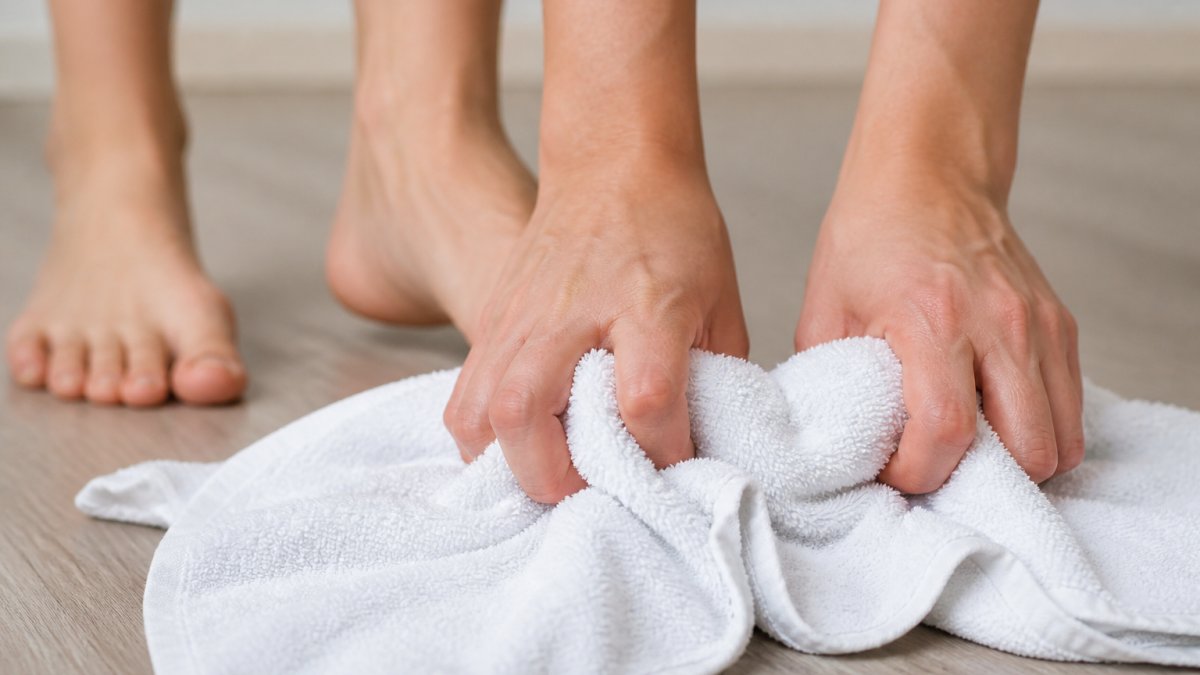
Toe spreads activate the smaller muscles between your toes that stabilize your forefoot. Sit with your feet flat.
Marble Pickups and Arch Activation
Scatter 20 marbles on the floor. Using only your toes, pick them up one at a time and place them in a cup.
Arch activation is even simpler. Stand barefoot. Press the outer edge of your foot into the ground while lifting your arch. Hold for five seconds. Release. Repeat 15 times.
Ankle Strengthening Exercises for Heel Stability
Your ankles bear the load when you're in heels. Weak ankles roll inward or outward, throwing your entire body off balance.
Resistance Band Ankle Rotations
Loop a resistance band around the ball of your foot while sitting. Slowly rotate your foot inward against the band's resistance. Hold for two seconds. Rotate outward.
Do the same movement with the band wrapped around your heel, pulling your toes toward your shin, then pointing your toes away. This builds strength in your shin and calf.
Single-Leg Balance Work
Stand on one foot for 30 seconds. Keep your other leg bent at the knee. Don't hold onto anything. Your ankle stabilizers will fire to keep you upright.
Progress to standing on one foot on a foam pad or pillow. The unstable surface forces your ankle muscles to work harder. Do this for 60 seconds, three times per leg, daily.
Calf Stretches for High Heels
Tight calves pull your foot into an unnatural angle when you're in heels. This creates excessive pressure on your arch and the ball of your foot. Loose, flexible calves let your foot sit naturally even in a steep heel.
Wall Calf Stretches and Downward Dog
Stand facing a wall, one foot forward and bent, one foot back and straight. Keep your back heel on the ground. Lean forward until you feel a stretch in your back calf. Hold for 30 seconds.
Downward dog (from yoga) stretches both calves simultaneously. Start on your hands and knees. Push your hips up and back, forming an inverted V shape.
Foam Rolling for Calf Tightness
A foam roller breaks up tension in your calf muscle. Sit on the floor with your legs extended. Place a foam roller under your calves. Roll slowly from your ankle to just below your knee.
Balance Exercises for Ankles
Balance is the hidden skill that separates comfortable heel-wearing from painful heel-wearing. When your balance is poor, you unconsciously grip the ground with your toes and tense your arch. This creates fatigue and pain.
Heel-to-Toe Walks and Tandem Stance
Walk in a straight line, heel to toe, as if on a tightrope. Do this for 30 feet. Your ankle stabilizers engage to keep you centered. Repeat three times.
Tandem stance is standing with one foot directly in front of the other, heel to toe, for 60 seconds. Don't hold anything. Your ankles work constantly to prevent you from falling sideways. Do this three times per leg, daily.
Foot Comfort Spray for Ultimate High Heels →
Practicing in Your Heels
Once your feet are stronger, practice walking in your heels on flat, even surfaces. Grocery store floors, hallways, your home, anywhere safe. Start with 10 minutes. Gradually extend to 30 minutes or longer.
Building Your Pre-Event Heel Routine
A complete routine before, during, and after wearing heels keeps your feet comfortable and prevents damage that accumulates over repeated events.
The Week Before: Conditioning Phase
Seven days before wearing heels for an extended period, increase your daily routine. Do all the foot strengthening exercises twice daily instead of once. Add 15 minutes of calf stretching and foam rolling each evening. This primes your feet for the load ahead.
Three days before, reduce intensity slightly. Do your normal routine once daily, but add 20 minutes of gentle walking in the heels you'll be wearing. Your feet need to adjust to the specific shoe, the exact heel height, and the angle of that particular footbed. Every shoe is different.
Two days before, rest your feet. Light stretching only. No intense strengthening work. Your muscles need recovery time to repair and strengthen.
The Day Of: Preparation and Protection
On the day of the event, do your normal routine in the morning. Eat a normal breakfast. Stay hydrated, dehydration makes muscles cramp and feet swell.
Two hours before wearing your heels, apply Foot Comfort Spray for Ultimate High Heels to your feet. The cooling menthol formula refreshes tired feet and prepares them for hours of wear. The non-numbing formula means you maintain natural sensation, you'll feel if something is wrong.

Put on your heels 30 minutes before you need to leave. Walk around your home. Notice any pressure points or friction hotspots.
During the Event: Maintenance Strategies
If the event lasts more than three hours, take a 10-minute break every two hours. Sit down. Remove your heels. Massage your arches with your thumbs, pressing firmly for 30 seconds per foot.
If you brought the travel-size Foot Comfort Spray, apply it to your feet once during the event, roughly halfway through.

Change socks or hosiery if possible. Moisture and sweat buildup cause friction and blisters. Fresh, dry socks absorb new sweat and reduce hotspots.
Combining Exercises with Foot Comfort Support
Strengthening your feet is half the solution. The other half is reducing friction and pressure while you're actually wearing heels.
Exercises build resilience. Foot comfort products provide immediate relief. Together, they're unstoppable.
Do your daily exercises to build long-term foot strength and ankle stability. This is your foundation. It takes weeks to show results, but the results are permanent. Strong feet stay strong.
Use foot comfort spray on the day of events to reduce friction and prevent blisters in the immediate term. The cooling menthol formula soothes tired feet without numbing them, so you maintain balance and natural sensation. This is your short-term solution, it works immediately.
Many people try one or the other. Exercises alone take too long to show results before a big event. Spray alone doesn't address the underlying weakness that makes heels painful in the first place.
| Approach | Timeline | Best For | Limitation |
|---|---|---|---|
| Foot strengthening exercises | 2-3 weeks to notice results | Long-term comfort and heel durability | Doesn't help for events sooner than 2 weeks |
| Foot comfort spray | Immediate (within minutes) | Events happening today or tomorrow | Doesn't build lasting foot strength |
| Both combined | Immediate comfort + lasting strength | Any timeline, any event | Requires consistent daily effort |
Conclusion
The exercises to strengthen feet for high heels work. They take 10-15 minutes daily. They require no equipment. They produce noticeable results in two to three weeks.
But strengthening alone isn't enough for immediate events. That's where Still Standing® Spray changes everything. The non-numbing, cooling menthol formula lets you wear heels comfortably for hours without sacrificing balance or natural sensation. Apply it before putting on your heels, and you're protected.
Combine a daily strengthening routine with Still Standing® Spray, and you've solved the heel pain problem entirely. Your feet become stronger, more resilient, and better prepared for anything. Learn how to stop feet from hurting in heels with our comprehensive prevention guide, or discover strategies for maintaining comfort during long events to extend your comfortable wear time even further.
Still Standing® Spray comes with a 30-day money-back guarantee. If it doesn't work for you, you get your money back. No questions. That's how confident we are that it will transform your heel-wearing experience. Get started with Still Standing® Spray and wear the heels you love without the pain you've always accepted.
Frequently Asked Questions
How often should I do foot exercises before wearing heels?
Start with 3-4 times per week for 2-3 weeks before a major event. This gives your feet and ankles time to adapt without overtraining. For daily heel wearers, maintain exercises 4-5 times weekly year-round. Listen to your body: if you feel sharp pain, skip a day. Consistent, moderate activity builds strength better than sporadic intense sessions.
Can foot exercises help reduce pain from wearing high heels?
Yes. Stronger feet and ankles absorb impact better and maintain proper alignment in heels, reducing strain on pressure points. Combined with foot comfort support like Still Standing® Foot Comfort Spray ($40), exercises address both the structural cause and immediate discomfort. The spray's cooling menthol formula works alongside your strengthened muscles to keep feet comfortable for hours.
What's the best way to strengthen feet for high heels if I have weak ankles?
Begin with seated exercises like towel scrunches and marble pickups to build intrinsic foot strength without balance demands. Progress to resistance band ankle work before advancing to standing balance exercises. Wear supportive shoes during daily activities while conditioning. If ankle weakness is severe or causes pain, consult a physical therapist before starting a new routine.
How do I know if I'm exercising my feet too much?
Sharp, shooting pain is a stop signal, rest that day. Mild muscle soreness 24-48 hours after exercise is normal. Swelling, persistent aching, or pain that worsens over several days means you've overdone it. Scale back frequency or intensity. Remember, you're building endurance, not training for a marathon. Quality controlled repetitions beat high-volume workouts.
Strong feet and smart support. That's the formula. Your next event doesn't have to hurt.
