
Last Updated: October 24, 2026
Quick Summary
Break in new leather heels slowly with short 20 to 30 minute wear sessions around the house, adding 15 minutes every few days. Wear thick socks and use gentle heat on tight spots to soften the leather, and protect your skin from friction with blister bandages or anti-chafe balm.
- Check the fit first: no stretching fixes a shoe that is a full size too small.
- Wear new heels indoors for 20 to 30 minutes once a day during the first week.
- Warm stubborn spots with a hair dryer on low, held about 6 inches away for 20 to 30 seconds.
- Leave a shoe stretcher in the shoe for 24 to 48 hours to widen the toe box.
- Breaking in leather shoes usually takes one to two weeks of regular, short wear sessions.
Table of Contents
- Why New Leather Heels Hurt and How Break-In Works
- Step 1: Diagnose the Fit Before You Break Anything In
- Step 2: Wear Them Around the House in Short Sessions
- Step 3: Use Thick Socks and Gentle Heat on Tight Spots
- How to Soften Leather Shoes by Leather Type and Finish
- How to Stretch Leather Heels at Home and With a Shoe Stretcher
- How Long Does It Take to Break In Leather Shoes?
- How to Prevent Blisters From New Heels and Treat Them Fast
- Frequently Asked Questions
Why New Leather Heels Hurt and How Break-In Works
New leather heels hurt because the leather is still tight and firm, not yet shaped to your foot.
Leather is skin: its fibers flex and relax with use and warmth.
The trouble is speed.
The fix is patience, not force. A slow, gradual break-in gives the leather time to give.
- Short wear sessions let the leather soften without rubbing skin raw
- Gentle heat relaxes leather fibers faster than wear alone
- Targeted stretching handles tight spots that wear cannot fix
- Friction control protects your skin while the shoe loosens
The steps below show how to break in new leather heels without wrecking your feet or the shoes.
Step 1: Diagnose the Fit Before You Break Anything In
Before any break-in routine, check whether the shoe actually fits. Breaking in the wrong size wastes time and hurts your feet.
A leather heel should feel snug, not painful.
Watch out: if your toes are pinched, the shoe is too short. No amount of stretching fixes a shoe that is a full size too small. Return it.
Use this quick fit test:
- Stand up and press where your longest toe sits. You want a finger's width of space.
- Walk a few steps. Your heel should not slip out of the shoe.
- Feel the sides. Tight spots should feel snug, not sharp or pinching.
- Check the width. If the shoe squeezes the ball of your foot hard, it is too narrow.
If the shoe passes this test, it is a break-in problem, not a size problem. Move to the next step.
Step 2: Wear Them Around the House in Short Sessions
Start your break-in at home with short wear sessions of 20 to 30 minutes, letting the leather soften without the full pressure of a long day out.
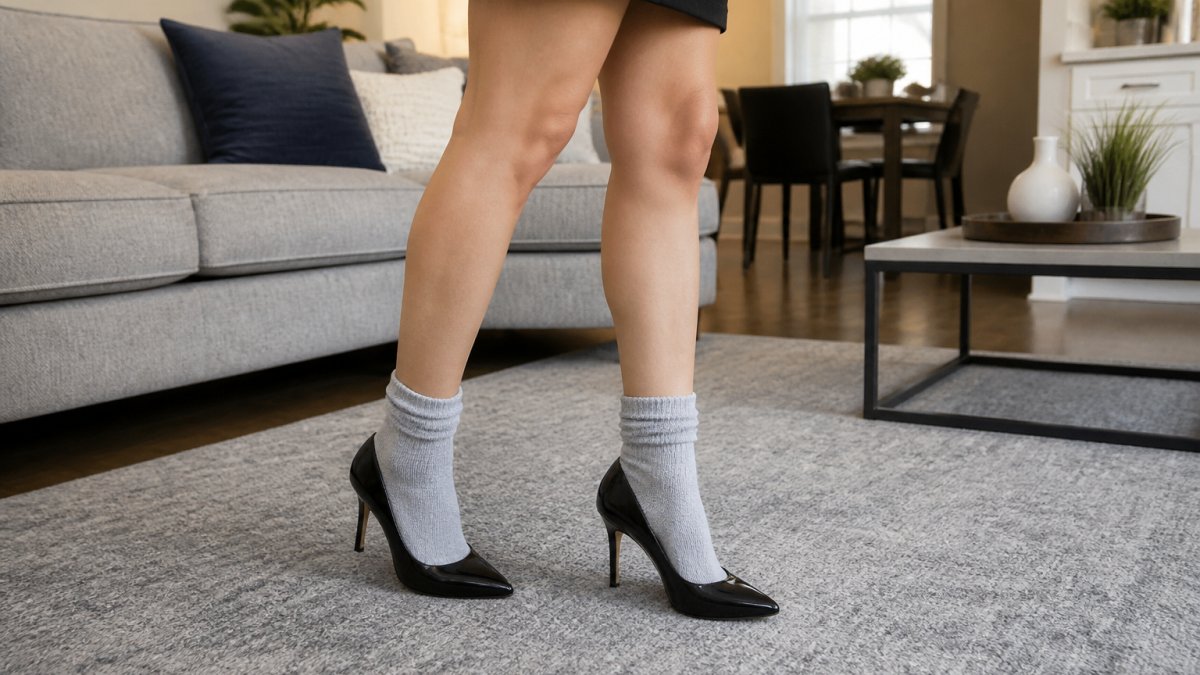
The house is the right place because you can stop the moment something feels wrong. No event depends on it. No long walk home.
Try this simple routine:
- Put the shoes on over thin socks or bare feet.
- Walk around for 20 minutes. Sit, stand, climb a few stairs.
- Take them off and check your heels and toes for red spots.
- Repeat once a day for the first week.
If you want broader guidance on wearing heels comfortably day to day, our guide on how to wear high heels comfortably covers posture, foot care, and daily habits.
Increase wear time slowly. Add 15 minutes every few days. Short walks outside come next, once the house sessions feel easy.
Step 3: Use Thick Socks and Gentle Heat on Tight Spots
Thick socks and gentle heat are the fastest safe way to soften tight leather: the socks add bulk so the shoe stretches more with each wear, and low heat relaxes the fibers so they give more easily.
Here is the sock method:
- Pull on a pair of thick socks.
- Work your feet into the new leather heels. It will feel tight. That is the point.
- Walk around the house for 15 to 20 minutes.
- Repeat daily until the shoes feel easier to pull on.
For stubborn tight spots, add gentle heat: warm the leather with a hair dryer on low, held about 6 inches away and kept moving, for 20 to 30 seconds. Then flex the shoe and wear it while it cools.
Watch out: too much heat dries out and cracks genuine leather. Keep the dryer on low, keep it moving, and never hold it in one spot.
How to Soften Leather Shoes by Leather Type and Finish
How you soften leather shoes depends on the finish, which decides which methods are safe.
Foot Comfort Spray for Ultimate High Heels →
Use this table to match your method to your shoe, then read the notes below for the heel-specific details:
| Leather Type | Best Softening Method | Avoid | Why It Matters for Heels |
|---|---|---|---|
| Full-grain / top-grain | Thick socks, gradual wear, low heat, shoe stretcher | High heat, soaking | The heel counter and toe box mold to your foot over 1-2 weeks; heat speeds this but can dry the finish |
| Patent / coated | Wear-in only, shoe stretcher, spot stretching | Hair dryer, water, freezer bag | The coating is a plastic film over leather; heat dulls or cracks it and water can cloud it |
| Suede | Soft brush, suede protector, short wear, suede-safe stretcher | Heat, water, harsh rubbing | Suede fibers mat and stain; a hair dryer can glaze the nap permanently |
| Nubuck | Soft brush, suede protector, short wear | Heat, water, oil-based conditioners | Similar to suede but slightly more forgiving; still avoid heat near the heel counter |
| Bonded / synthetic | Short wear sessions, shoe stretcher | Heat (warps), water (delaminates) | These uppers do not mold like leather; if they pinch, the fit is wrong, not stiff |
Full-grain and top-grain leather. These are the most forgiving.
Suede and nubuck. These finishes have a nap that heat and water can mat or stain.
Bonded and synthetic uppers. These are not leather and do not mold the same way. Heat can warp them and water can delaminate the layers.
A common mistake is treating every leather shoe the same.
How to Stretch Leather Heels at Home and With a Shoe Stretcher
Stretching leather heels targets tight areas that wear alone cannot fix.
Home stretching options:
- Shoe stretcher: Place it in the shoe, turn the knob to widen it, and leave it for 24 to 48 hours. Best for the toe box and width.
- Spot stretching: Some stretchers come with small plugs that push out a single tight spot, like a pressure point over a toe.
- Freezer bag method: Fill a sealed bag with water inside the shoe and freeze it. As the water expands, it stretches the leather. Use this only on sturdy leather, never on patent.
For heel-specific pressure, stretch the tight area, then wear the shoe briefly while the leather is still warm and pliable. The leather holds its new shape better when it cools on your foot.
If a spot will not give after a week of home stretching, a professional shoe repairer can stretch it on a proper machine without damaging the finish.
How Long Does It Take to Break In Leather Shoes?
Breaking in leather shoes usually takes one to two weeks of regular, short wear sessions. Soft leathers can feel comfortable in a few days; stiff, structured leather heels take longer.
The timeline depends on three things:
- Leather stiffness: Softer leather breaks in faster than firm, structured leather.
- How often you wear them: Daily short sessions work better than one long wear.
- Fit: A well-fitting shoe breaks in faster than a snug one.
Do not rush it with long wear days. Pushing through pain does not speed up the leather. It just damages your feet and can stretch the shoe unevenly.
Once your heels are broken in, keep the leather in good shape with our tips on how to make heels last longer.
How to Prevent Blisters From New Heels and Treat Them Fast
Preventing blisters from new heels comes down to cutting friction where the shoe rubs. The heel counter and the back of the heel are the usual trouble zones, followed by the toe box and the top edge pressing on the instep.
Friction barriers that actually work. The goal is to reduce shear between skin and leather, not just add cushion. Options, from least to most protective:
- Thick socks during home sessions add bulk and cushion the rub while the leather softens.
- Blister bandages (hydrocolloid dressings) on hot spots before they blister, these seal out friction and moisture and stay on for days.
- Anti-chafe balm or stick applied to the heel, the back of the heel, and any rub point. Reapply every few hours at events.
- Heel grips or silicone heel protectors inside the shoe to cushion the heel counter.
- A comfort spray before you put the shoes on. A cooling formula can help your feet feel comfortable through a long day, but it does not replace a physical friction barrier on a hot spot.
A practical prevention routine for new heels:
- Before first wear, identify the rub points by walking a few steps in thin socks and feeling where the shoe presses.
- Apply a blister bandage or anti-chafe balm to those points before you leave the house.
- Carry a travel-size comfort spray and a spare blister bandage for touch-ups at events and long workdays.
- Treat a hot spot the moment you feel rubbing, do not wait for a blister to form.
- Take the shoes off every few hours and check your heels and toes for red spots.
First aid if a blister forms. Keep it clean and covered with a hydrocolloid dressing. Do not pop it, the fluid is a sterile cushion and popping invites infection.
Before you spray anything on sore or broken skin, read how to use foot pain spray effectively so you apply it correctly. If your skin is sensitive, our safe heel spray for sensitive skin guide explains what to look for. For a spray that soothes feet through long events, see our foot comfort spray for high heels.

Frequently Asked Questions
How long do leather shoes take to break in?
Most genuine leather heels need about one to two weeks of short, regular wear sessions to soften and mold to your feet. Thin, supple leathers can feel comfortable after three or four wears, while stiff patent or structured leathers may take two to three weeks. The key is consistency: several 20 to 30 minute sessions at home plus short walks beat one long, painful day. If a spot still rubs hard after three weeks of gradual wear, the fit is likely wrong rather than the shoe being unbroken.
Can you stretch leather heels at home?
Yes, in most cases. A shoe stretcher left in place for 24 to 48 hours is the safest way to how to stretch leather heels, especially in the toe box. You can also use the thick-sock method with gentle warmth from a hair dryer on low heat, holding it about 6 inches away for 20 to 30 seconds at a time. Never soak the leather or apply high heat directly, since that damages the finish. For structured heels or half-size adjustments, a professional shoe repairer is the better call.
How do you stop new heels from rubbing the back of your heel?
Target the heel counter first. Wear the shoes with thick socks around the house to soften the back, then flex the heel counter gently with your thumbs. A thin blister patch on your skin, not the shoe, reduces friction during the first few wears. Keep sessions short and build up wear time gradually. If the back of the heel still digs in after a week, the shoe may be too long or too narrow, and no amount of break-in will fix a fit problem.
Is there a tool to break in shoes without wearing them?
A shoe stretcher is the main tool. It widens the toe box and relieves pressure points while the shoe sits in your closet. Combine it with a leather conditioner on genuine leather to soften the material, and leave the stretcher in for a day or two. Spot stretchers that push out specific tight areas also help. Tools reduce the work, but a short wear session still matters because the shoe has to mold to your foot's shape, not just get wider.
