
Table of Contents
- Why Your Feet Burn in Pumps All Night
- How to Make Heels More Comfortable Before the Event
- High Heel Insoles for Ball of Foot Pain and Cushioning
- How to Prevent Blisters in Heels While You Dance
- During the Event: Safe Relief and Footwear Swaps
- After the Event: Cooling and Recovery for Hot Feet
- When Burning Feet Need Medical Attention
- Conclusion
- Frequently Asked Questions
Last Updated: October 9, 2026
Why Your Feet Burn in Pumps All Night
If you want to know how to keep feet from burning in pumps all night, start with the mechanics. A pump does three things to your foot at once, and all three get worse the longer you wear it.
It shifts your weight forward. A heel lifts your heel bone off the ground and tips your body weight onto the forefoot. The higher the heel, the steeper the tilt. At a two-inch heel the shift is modest.
It narrows the space your toes have to work with. Most pumps taper to a point or a narrow almond. Your toes are designed to splay outward when you bear weight, which spreads the load across a wider surface. A tapered toe box blocks that splay.
It traps heat and moisture. Pumps are usually worn barefoot or with a thin liner, and the closed toe box holds warmth against skin that cannot breathe.
What the Burning Sensation Actually Signals
A burning sensation in the feet is an irritated-nerve signal, not a skin problem. When your toes are squeezed and your arch is unsupported, pressure builds on the nerves that run along the ball of the foot. Blood pools in the lower legs because you are standing still, and the tissue around those nerves gets hot, swollen, and angry. Tingling and numbness can follow.
The pattern is predictable. Burning usually starts at the ball of the foot, spreads toward the toes, and intensifies in the hours when you are standing still rather than moving. That is why it hits hardest during a seated dinner, a long toast, or the drive home, not during the dancing.
That matters because it separates two very different situations. Temporary shoe-related discomfort fades within an hour of taking your shoes off. Ongoing burning, especially at night, points somewhere else entirely. We will come back to that.
How to Make Heels More Comfortable Before the Event
Most of the work happens before you leave the house. A common mistake is treating comfort as something you fix at hour four, when the damage is already done. Prep your feet, your shoes, and your plan in advance, and the night goes very differently.
Here is the sequence we recommend:
- Shop for fit late in the day. Feet swell as the day goes on. A pump that fits at 9 a.m. will pinch by 9 p.m.
- Look for a wider toe box. If your toes touch the front edge when you stand, the shoe is too small.
- Check the heel height. A two-inch heel shifts less weight onto the ball of your foot than a four-inch stiletto.
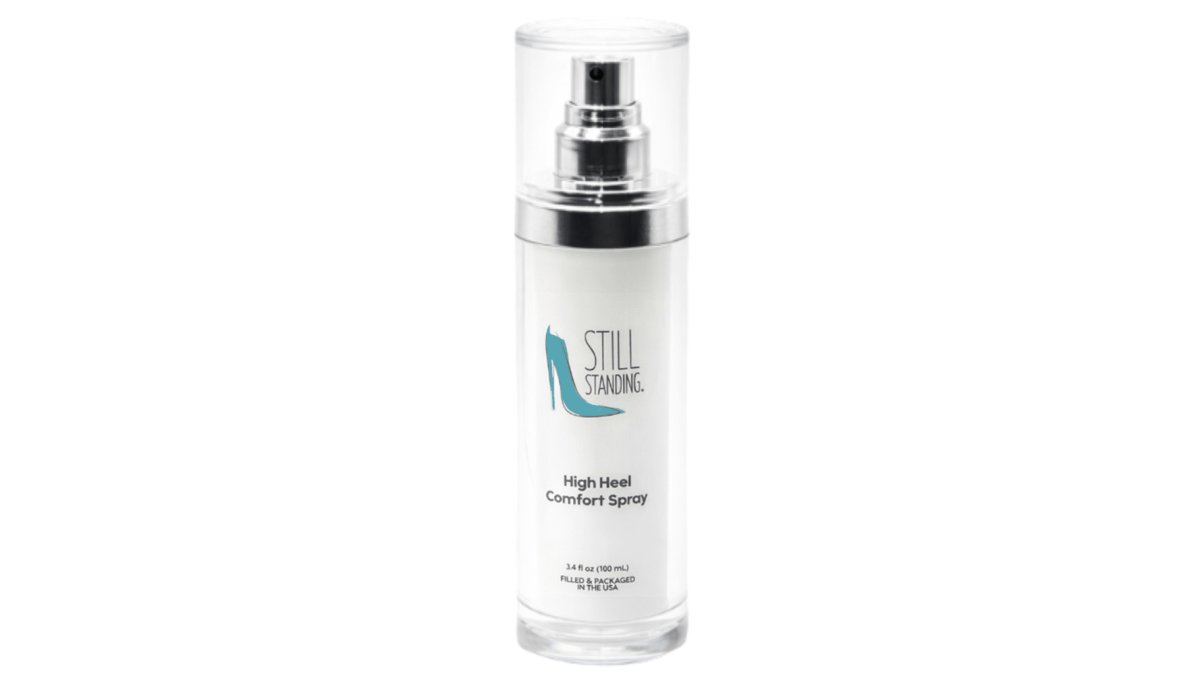
- Treat your feet before you put the shoes on. A cooling menthol spray applied to clean, dry feet helps them feel refreshed from the first step.
- Pack a backup pair. Flats in your bag are not defeat. They are a strategy.
How to Break In Pumps Before the Big Night
New pumps need a slow introduction, not a ten-hour debut. Wear them around the house for 20 to 30 minutes at a time over several days. Then take them outside for short errands. Thick socks with a hair dryer on the low setting can soften stiff leather at the heel and toe. Never wear a brand-new pair to a wedding you are standing in.

High Heel Insoles for Ball of Foot Pain and Cushioning
Insoles help, but they are not a cure, and knowing which type to buy saves you money. High heel insoles for ball of foot pain come in three main types:
| Insole Type | What It Does | Best For |
|---|---|---|
| Metatarsal pad | Lifts and cushions the ball of the foot | Sharp, pinpoint ball pain |
| Gel forefoot cushion | Spreads pressure across the forefoot | General burning after a few hours |
| Arch support insert | Supports the midfoot and limits sliding | Flat feet, slipping heels |
The thing nobody tells you about insoles is that they take up volume. Add a thick gel pad to a snug pump and you have made the pinch worse. Go thin, and test the fit before the event.
How to Prevent Blisters in Heels While You Dance
How to prevent blisters in heels comes down to friction and moisture. Blisters form where the shoe rubs and the skin stays damp. Dancing multiplies both.
- Apply a thin barrier balm or spray to hot spots before you dress
- Choose moisture-wicking socks or no-show liners over bare skin
- Keep a few blister bandages in your clutch
- Never push through a fresh rub. Cover it the moment you feel it
A blister caught early is a minor annoyance. A blister ignored at hour two is the reason you leave the reception barefoot.
During the Event: Safe Relief and Footwear Swaps
Mid-event relief is about buying yourself time, not toughing it out. The mistake most people make is waiting until the burn is severe before doing anything.
Think of the night in stages, and act at each one.
Hour one to two: protect the forefoot. You are still fresh, so this is when prevention pays off. If you are seated for a toast or a course, slip your shoes off under the table and let your feet cool.
Foot Comfort Spray for Ultimate High Heels →
Hour two to four: take a real break. This is when the first burn usually shows up.
Hour four and beyond: swap if you can. This is the stage where most people are deciding whether to leave early. If you have a backup pair, this is when to use it.
What to Do If the Burn Turns Into Numbness or Sharp Pain
There is a line between discomfort and a problem. Discomfort is a dull, hot ache that eases when you shift your weight. A problem is numbness, tingling that does not stop, or a sharp, shooting pain in the ball of the foot or toes.
If you hit that line, the shoes come off. Not later, not after the next song, now. Numbness means the nerve is being compressed hard enough to interfere with sensation, and pushing through it is how people roll an ankle on stairs or miss a blister that is already forming. Find a seat, get the shoes off, and do not put them back on that night.
The Backup Pair Strategy
A backup pair is not defeat. It is the single most effective in-event move you can make. The best backup is a flat or low wedge that fits in a clutch or a small tote, a foldable ballet flat, a soft leather slip-on, or a low block heel. Test the swap before the event so you know it fits and does not rub.
If you cannot carry a second pair, carry a thin gel forefoot pad and a blister bandage. They take up almost no space and can extend your night by an hour or two. But if the burn is already sharp, a pad will not fix it. At that point, the only real relief is getting the shoes off.
After the Event: Cooling and Recovery for Hot Feet
The recovery routine matters as much as the prep. When you get home, get the shoes off and your feet up. Elevate your legs above heart level to help blood drain back out of your feet and reduce swelling.
Then cool things down:
- Soak your feet in cool water for 15 minutes
- Skip ice directly on the skin, which can damage tissue
- Use a fan on bare feet if soaking is not practical
- Gentle ankle circles and toe stretches get circulation moving again
If your feet are still hot and throbbing an hour later, that is your cue to read the next section carefully.
When Burning Feet Need Medical Attention
Temporary burning from tight shoes should ease within an hour of removing them. Burning that continues, especially at night, needs a medical evaluation.
Watch for these signs:
- Burning that wakes you up or keeps you up
- Tingling, numbness, or loss of feeling in your toes
- Pain that spreads up the leg
- One foot much hotter, redder, or more swollen than the other
- Symptoms that show up without tight shoes
Ongoing nighttime burning can point to nerve irritation or nerve damage, circulation problems, a nutritional deficiency, or another underlying condition. The National Institute of Neurological Disorders and Stroke publishes plain-language information on peripheral neuropathy worth reading if symptoms persist. For general foot health guidance, the American Podiatric Medical Association is a solid starting point. See a doctor rather than self-treating.
Conclusion
Frequently Asked Questions
Why do my feet burn when I wear high heels?
Burning in pumps usually comes from a mix of pressure, friction, and restricted circulation. A narrow toe box squeezes the ball of the foot, and the raised heel shifts your weight forward, so the same small area absorbs your full body weight with every step. Add hours of standing and the nerves and skin in that spot get irritated. Blood pooling and swelling make it worse by the end of the night, which is why the burning often peaks after you finally sit down.
How can I keep my feet from burning in pumps all night?
Plan in three stages. Before the event, break in the pumps, add cushioning at the ball of the foot, and apply a non-numbing foot comfort spray like Still Standing® to help keep feet feeling refreshed. During the event, sit and elevate your feet when you can, and swap into flats for part of the night. Afterward, soak your feet in cool water for 15 to 20 minutes and raise your legs above heart level to ease swelling.
Should I break in new pumps before wearing them all night?
Yes. New pumps have stiff uppers and soles that press unevenly against your skin, which speeds up friction and burning. Wear them around the house for 20 to 30 minutes a day for about a week before the event, building up to a longer stretch. A shoe stretcher or thick socks with a hair dryer on low heat can soften tight spots. Breaking them in first means the shoe flexes with your foot instead of against it.
When should burning feet be checked by a doctor?
See a doctor if the burning continues after you take the shoes off and rest, if it happens in flat shoes too, or if you notice numbness, tingling, or loss of feeling in your toes. Those signs can point to nerve irritation or neuropathy rather than simple shoe pressure. Burning that comes with redness, swelling, or skin breakdown also needs a medical look. Temporary burning that fades within a few hours of removing your pumps is usually shoe-related and not a nerve problem.
Burning feet can turn a night you have looked forward to for months into a countdown to the car. Still Standing® Spray makes the prep step simple: our non-numbing cooling menthol formula is designed for high heels and stilettos, comes in a TSA-friendly 3.4 fl oz bottle plus a 0.5 fl oz travel size for touch-ups, and is backed by a 30-day money-back guarantee. Get started with Still Standing® Spray and stay on your feet from the first step to the last dance.