
Last Updated: October 25, 2026
Quick Summary
To stretch tight heels, use a shoe stretcher for 4-8 hours or try the heat and thick socks method by wearing heels over thick socks while applying low heat from a hairdryer for 1-2 minutes, then walking around for 10-15 minutes. Most shoes reach comfortable fit after 2-4 stretching sessions spaced 1-2 days apart, expanding approximately a quarter to half size.
- Shoe stretchers come in two-way (expands width and length) and one-way (width only) types, with one-way being sufficient for most people.
- Professional stretching costs between $15 and $40 per pair and is worth considering for expensive or delicate materials.
- Leather stretches most forgiving and can reach half-size expansion, while synthetics are stiffest and may reach only quarter-size.
- Avoid heat methods on suede and patent leather; use shoe stretcher only for suede with 6-8 hour sessions.
- Stretching typically expands shoes by a quarter size, sometimes a half size, but full-size stretching is not realistic.
Table of Contents
- Why Your Heels Feel Tight and Where the Pressure Points Are
- How to Stretch Tight Heels Using a Shoe Stretcher
- The Heat and Thick Socks Method for Overnight Stretching
- Can You Stretch Shoes a Half Size
- Material-Specific Stretching for Leather, Suede, and Synthetics
- How Cobblers Stretch Shoes and When Professional Help Pays Off
- When Stretching Won't Fix the Fit and Blister Prevention During Break-In
- Wear Your Stretched Heels Comfortably on Event Day
- Frequently Asked Questions
Why Your Heels Feel Tight and Where the Pressure Points Are
Tight high heels signal that your shoe's shape doesn't match your foot's, creating pressure points that worsen with wear.
The toe box is where your toes sit; when tight, it squeezes toes and causes pain and blisters.
New shoes feel tighter because leather or synthetic material hasn't broken in. Heat, moisture, and repeated flexing gradually soften these materials, but you can accelerate the process.
Before stretching, wear your heels around the house briefly to identify pressure points. Mark them with tape inside the shoe, since different areas require different techniques.
How to Stretch Tight Heels Using a Shoe Stretcher
A shoe stretcher expands your heels from the inside out with gradual, even pressure. For high heels, it's one of the most reliable methods because it controls exactly how much stretch happens.
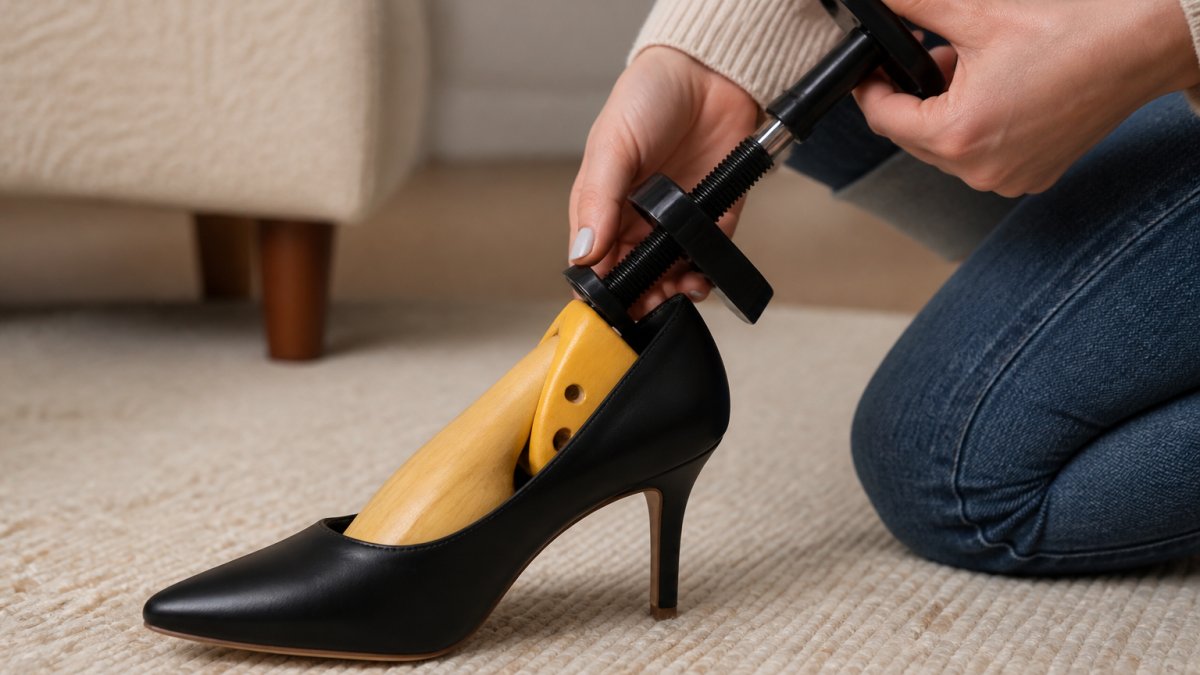
Shoe stretchers come in two main types: two-way stretchers and one-way stretchers. Understanding the difference helps you choose the right tool for your needs.
Two-Way vs. One-Way Stretchers
A two-way stretcher expands width and length simultaneously via a turn handle. It works best when your entire shoe feels snug and both dimensions need adjustment.
A one-way stretcher expands only the width. It's simpler and cheaper, and works best when your heel fits lengthwise but feels tight across the toe box or ball. For most people, a one-way stretcher is sufficient because width, not length, is usually the problem.
Step-by-Step Stretcher Method
Step 1: Insert the stretcher into your shoe. Place the stretcher inside the heel with the handle facing out. Make sure it sits flat and centered.
Step 2: Position stretcher blocks at pressure points. Most stretchers include small blocks or plugs that concentrate the stretch on specific areas.
Step 3: Turn the handle slowly. Expand gradually until you feel gentle resistance, not force. Over-tightening can damage the shoe or cause uneven stretching.
Step 4: Leave the stretcher in place for 4-8 hours. Overnight works well; for daytime use, 4 hours is usually enough. Even a few hours makes a noticeable difference.
Step 5: Remove the stretcher and try on your heels. Walk around your house for 10-15 minutes. If pressure points remain, repeat the next night.
Step 6: Repeat as needed. Most shoes need 2-4 rounds of stretching to reach comfortable fit. Space these sessions 1-2 days apart to allow the material to settle between stretches.
The Heat and Thick Socks Method for Overnight Stretching
Heat softens shoe material, making it more pliable. Combined with thick socks, this accessible method applies gentle, continuous pressure while the material is warm.
Step 1: Put on thick socks. Wear the thickest socks you own, wool socks or thermal socks work best.
Step 2: Put on your tight heels over the thick socks. Your foot will feel very snug. This is intentional.
Step 3: Use a hairdryer on low or medium heat. Point it at the tight areas for 1-2 minutes, keeping it moving. The goal is to warm the material, not burn it.
Step 6: Repeat nightly for 3-5 nights. Most shoes reach comfortable stretch after several sessions. Each round expands the shoe a little more.
Watch out: If your heels have delicate finishes like patent leather or suede, test heat on a hidden area first.
Can You Stretch Shoes a Half Size
Stretching typically expands a shoe by a quarter size, sometimes a half size with aggressive, repeated stretching. Full-size stretching is not realistic.
Shoe materials have limits: leather stretches more than synthetics, patent finishes stretch minimally, and the shoe's structure resists extreme expansion. Forcing past the maximum can damage the shoe.
A quarter-size stretch usually fixes "almost right" shoes. If your heels are a full size too small, stretching won't solve it, so consider professional help or accept that these heels may not work for you.
Material-Specific Stretching for Leather, Suede, and Synthetics
Different materials respond differently to stretching. Using the wrong technique for your shoe's material can damage it. Knowing your material first prevents costly mistakes.
Leather and Patent Finishes
Leather is the most forgiving material for stretching, naturally flexible and softening with heat and moisture. It often reaches a half-size expansion with repeated stretching.
Patent leather has a plastic coating that makes it stiffer and prone to cracking if stretched aggressively. Use gentle heat only: the heat and thick socks method works, but at low heat for 60-90 seconds instead of 2 minutes.
For leather and patent finishes, shoe-stretching spray accelerates the process. This spray softens the material temporarily, making it more receptive to stretching.
Suede and Delicate Materials
Suede is delicate and prone to staining, discoloration, and water damage. Avoid the heat method entirely, since a hairdryer can scorch or discolor it.
For suede, use a shoe stretcher only, with gentle pressure. Leave the stretcher in place for 6-8 hours rather than overnight to minimize stress on the material. Repeat every 2-3 days.
Suede-specific stretching spray exists and works well. This spray is formulated to soften suede without damaging the nap (the soft texture). Follow product instructions carefully. Most recommend spraying lightly, wearing the shoes for 20 minutes, then air-drying away from direct heat.
Synthetic Materials
Synthetics like polyester, nylon, and plastic-based fabrics are stiffer than leather, stretch less, and can permanently warp if over-stretched.
For synthetics, use a shoe stretcher with moderate pressure. Leave it in place for 4-6 hours. Repeat every other day. The heat method works but requires lower temperatures. Use only low heat settings and keep the hairdryer moving constantly.
Synthetic materials may reach only a quarter-size expansion, even with repeated stretching. If your synthetic heels feel significantly too tight, stretching may not be the answer.
Different shoe materials require different stretching approaches to avoid damage and achieve the best results.
| Material | Best Method | Key Consideration |
|---|---|---|
| Leather | Heat and thick socks or shoe stretcher | Most forgiving; can reach half-size expansion |
| Patent leather | Heat and thick socks at low heat | Prone to cracking; use 60-90 seconds only |
| Suede | Shoe stretcher only | Delicate; avoid heat; leave stretcher 6-8 hours |
| Synthetics | Shoe stretcher with low heat | Stiffest material; may reach only quarter-size |
How Cobblers Stretch Shoes and When Professional Help Pays Off
Professional cobblers have industrial-grade equipment and experience, stretching shoes more effectively than home methods and fixing complex fit issues DIY can't. Learn how to make heels last longer with professional care and maintenance strategies after stretching.
Cobblers use commercial stretchers, specialized solutions, and professional heat equipment, targeting very specific areas, just the toe box, heel, or one side, with precision that's hard to achieve at home.
Professional stretching typically costs between $15 and $40 per pair, depending on the complexity. For expensive heels or delicate materials, professional stretching is worth the investment. For cheaper heels, home methods are usually sufficient.
Consider professional help if:
- Your heels are expensive or irreplaceable
- The material is delicate (suede, silk, special finishes)
- Home stretching hasn't worked after 4-5 attempts
- The fit problem is very specific (one side only, just the heel counter)
- You need results fast and can't wait for multiple home-stretching sessions
A cobbler can also assess whether your heels are actually stretchable. Some shoes are constructed in ways that resist stretching.
When Stretching Won't Fix the Fit and Blister Prevention During Break-In
Some tightness can't be fixed by stretching.
Heel slippage is different from overall tightness. You can also explore how to wear high heels comfortably for techniques that address slippage specifically.
During the break-in period, whether you're stretching or just wearing new heels, blisters are a real risk. Blisters form where friction and pressure combine. Prevent them by:
- Wearing blister prevention products before pain starts, not after. Still Standing® Spray applies before you put on your heels and prevents foot pain without numbing, so you maintain balance and feel the ground. This matters for safety, numbing products can cause dangerous falls because you lose proprioceptive feedback.
- Using gel pads or cushioned inserts at known pressure points
- Wearing moisture-wicking socks during break-in
- Taking breaks every 30-45 minutes during the first few wears
If a blister does form, stop wearing those heels for a few days. Let the blister heal. Continuing to wear tight heels over an open blister risks infection.
For comprehensive guidance on preventing blisters and maintaining comfort during extended wear, explore best high heel comfort products and safe foot relief for daily wear.
Wear Your Stretched Heels Comfortably on Event Day
After stretching your heels, the final step is wearing them confidently for hours.
On event day:
Apply foot comfort products before getting dressed. If you're using Still Standing® Spray, apply it to your feet 10-15 minutes before putting on your heels. The non-numbing formula prevents pain while keeping your feet responsive, so you can walk with confidence and balance. This is especially important for events like weddings where you'll be on your feet for extended periods.
Take breaks when possible. Remove your heels for 5-10 minutes every hour if the venue allows. Sitting down and letting your feet breathe helps prevent swelling and pain buildup.
Stay hydrated. Swollen feet are tighter feet. Drinking water throughout the event helps minimize swelling.
Move your feet regularly. Don't stand still for long periods. Walking, shifting your weight, and flexing your toes keeps circulation moving and reduces stiffness.
Wear your stretched heels before event day. Don't debut freshly stretched heels at an important event.
The combination of proper stretching and smart comfort strategies means you can wear high heels for hours without pain.
Stretching tight heels transforms shoes that feel painful into ones you can actually wear.
Frequently Asked Questions
Can you stretch heels a half size?
Yes, you can stretch tight heels a half size with consistent effort, though results depend on the shoe material and construction. Leather and suede respond best to stretching, while synthetic materials have limits. A professional cobbler can typically stretch heels up to a half size larger, and home methods using a shoe stretcher or heat can achieve similar results over several days. However, stretching beyond a half size risks damaging the shoe's structure and fit.
How long does it take to stretch heels overnight?
The heat and thick socks method can show noticeable results in one night, though full stretching typically takes 3 to 5 days of repeated use. For overnight stretching, wear thick socks inside your heels for 6 to 8 hours while applying gentle heat with a hairdryer on low setting. This softens the material and gradually expands the shoe. A shoe stretcher left in overnight works more gently and may need 2 to 3 nights to achieve significant stretch, depending on the heel material.
How do cobblers stretch shoes?
Professional cobblers use industrial shoe stretchers, specialized machines, and leather-conditioning techniques to stretch heels safely. They assess the shoe material, identify tight spots, apply conditioner or stretching solutions, then use mechanical stretchers calibrated to precise measurements. Cobblers can stretch shoes a half size or more without damaging them. This professional approach costs more than home methods but guarantees results and protects valuable heels. Most cobblers complete stretching within 5 to 7 business days.
What's the difference between stretching spray and other foot comfort solutions?
Stretching spray softens shoe material to allow gradual expansion, while numbing products mask pain without changing the shoe's fit. Non-numbing foot comfort sprays like Still Standing® prevent pain through cushioning and support without dulling sensation, allowing you to feel your feet and avoid dangerous falls. Gel inserts add bulk inside the shoe, which can actually tighten heels further. Stretching spray works alongside other methods to soften leather and synthetic materials, making it ideal for combining with a shoe stretcher or heat method for faster, safer results.
