
Table of Contents
- Understanding Foot Pressure and Stiletto Discomfort
- Step 1: Prepare Your Feet Before Wearing Stilettos
- Step 2: Use Ball of Foot Pain Relief Techniques
- Step 3: How to Break In New Stilettos Safely
- Step 4: Adjust Your Heel Height and Shoe Fit
- Step 5: Stretching and Mobility Exercises During Wear
- Step 6: Post-Wear Recovery and Physical Therapy
- Step 7: Still Standing Spray Benefits for Long Events
- Frequently Asked Questions
Last Updated: September 27, 2026
Understanding Foot Pressure and Stiletto Discomfort
Stilettos are stunning. They're also brutal on your feet. The problem isn't vanity, it's physics. When you wear a stiletto, your body weight concentrates on a tiny surface area. Your forefoot bears most of that load. The ball of your foot takes the brunt. This creates intense metatarsal pain and pressure that builds throughout the day.
The good news: relieving foot pressure from stilettos is completely achievable. You don't need to suffer through weddings, work events, or nights out. Still Standing® Spray empowers high-heel lovers to confidently wear their favorite shoes for hours. The key is understanding what causes the pain, then using proven techniques to prevent it before it starts.

Most guides tell you to "just wear flats" or "break in your shoes." That's not realistic if you love stilettos. Instead, this guide walks you through seven concrete steps for relieving foot pressure from stilettos. You'll learn how to prepare your feet, use cushioning strategically, adjust your shoes, and recover properly. By the end, you'll have a complete system that works.
Step 1: Prepare Your Feet Before Wearing Stilettos
Your feet need prep work before they hit the heels. Think of this as a warm-up before exercise. Clean feet first. Dry them completely. Then apply a foot comfort product designed to soothe and refresh tired feet before they're even in the shoes.

Still Standing® Spray is built for this exact moment. The cooling menthol formula refreshes your skin and helps prepare your feet for hours in heels. Spray it evenly across the ball of your foot, heel, and toe box. Let it dry for 30 seconds before putting on your shoes.
Why start here? Because relieving foot pressure from stilettos starts before you slip them on. A prepared foot handles pressure better than an unprepared one. The menthol helps, and you're being proactive about comfort.
Apply a Foot Comfort Spray
A quality foot comfort spray cools and refreshes. Not all sprays are created equal. Numbing sprays mask pain temporarily but create a real safety hazard, you can't feel your foot, so you're more likely to fall or injure yourself without realizing it.
Still Standing® uses a non-numbing formula instead. You maintain full sensation in your feet. You stay safe. You stay comfortable. The spray works by soothing your skin. Apply it 2-3 minutes before putting on your stilettos. This targeted approach to preventing skin irritation extends beyond your feet, as similar care is essential when addressing friction in other areas prone to discomfort.
Step 2: Use Ball of Foot Pain Relief Techniques
The ball of your foot is the pressure hotspot. This is where metatarsal pain develops. Relieving foot pressure from stilettos means targeting this zone specifically. Two proven techniques work here: cushioning pads and arch support placement.
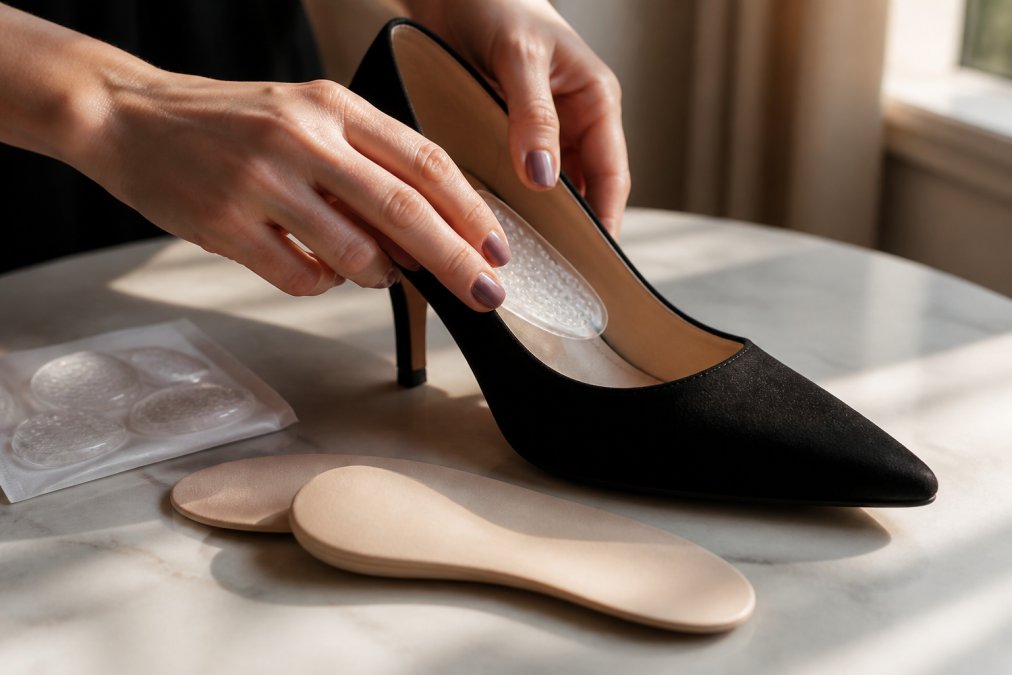
Cushioning Pads and Inserts
Silicone gel inserts are your first line of defense. These small pads sit directly under the ball of your foot. They absorb impact and distribute pressure across a wider surface area. This is basic physics, spread the load, reduce the pain.
Here's what works:
- Use gel pads specifically designed for the forefoot
- Position them under the metatarsal heads (the bony bumps on the ball of your foot)
- Trim them if needed to fit inside your shoe without bunching
- Replace them every 3-4 months as they compress over time
The best pads stay in place without sliding. They're thin enough that your shoe still fits. They're thick enough to actually cushion. Most drugstore options fall short on one or both counts. A quality gel pad makes a measurable difference within the first hour of wear.
Arch Support Placement
Your arch needs support too. When the arch collapses under pressure, the entire forefoot bears more load. Proper arch support prevents this collapse. It also improves overall weight distribution, which reduces pressure concentration on the ball of your foot.
Arch support comes in two forms: custom orthotics and off-the-shelf insoles. For stilettos, off-the-shelf works fine. Look for thin, flexible arch supports that fit inside your heel without taking up too much space. Position them so they run from your heel to just before your toes. They should feel snug but not restrictive.
The combination of forefoot cushioning plus arch support creates a two-part system. Cushioning handles the ball of your foot. Arch support handles weight distribution. Together, they cut pressure significantly.
Step 3: How to Break In New Stilettos Safely
New stilettos are stiff. Stiff shoes create friction. Friction creates blisters and pain. Breaking in new stilettos properly prevents this. The process is simple but requires patience.
Foot Comfort Spray for Ultimate High →
Start at home. Wear your new stilettos for 15-20 minutes while sitting or walking around your house. Do this for 3-4 days in a row. Your feet adapt. The shoe softens slightly. The materials relax.
Step 4: Adjust Your Heel Height and Shoe Fit
Not all stilettos are created equal. Heel height matters. Shoe fit matters. These two factors alone account for a huge portion of foot pressure and discomfort.
Finding the Right Heel Height
Higher isn't better. A 4-inch heel puts your foot at a steeper angle than a 3-inch heel. The steeper the angle, the more pressure on the ball of your foot. This is geometry, not opinion.
Ensuring Proper Toe Box Width
A tight toe box increases pressure across your entire forefoot. Your toes can't spread naturally. The metatarsal heads get squeezed. Pain follows.
Step 5: Stretching and Mobility Exercises During Wear
Your feet and ankles need mobility work while you're wearing stilettos. This isn't about toughening up, it's about maintaining function and reducing stiffness.
During events, do these simple moves every hour:
- Rise up on your toes, then lower back down (10 times)
- Flex your foot forward and backward (10 times each direction)
- Roll your ankle in circles (5 times each direction)
- Spread your toes wide, then relax (10 times)
- Walk around for 2-3 minutes if possible
Step 6: Post-Wear Recovery and Physical Therapy
What you do after you take off your stilettos matters as much as what you do while wearing them. Recovery prevents cumulative damage and sets you up for comfort next time.
Icing and Cold Therapy
Ice reduces swelling and inflammation. After wearing stilettos for several hours, your feet will be warm and potentially swollen. Ice brings that down. It also numbs any residual discomfort.
Here's the protocol:
- Remove your stilettos immediately after the event
- Soak your feet in cool water for 10 minutes, or apply ice packs for 15 minutes
- Elevate your feet above heart level for 30 minutes while iced
- Do this the same day you wear heels, ideally within an hour of removing them
Foot Strength Training
Strong feet handle pressure better. Weak feet fatigue quickly and hurt more. Simple foot strength exercises done 3-4 times per week make a measurable difference.
Try these:
- Towel scrunches: Lay a towel on the floor, place your toes at one end, and scrunch the towel toward you using only your toes (3 sets of 10 scrunches)
- Calf raises: Rise up on your toes, hold for 2 seconds, lower down (3 sets of 15 reps)
- Marble pickups: Scatter marbles on the floor and pick them up using only your toes (3 sets of 10 pickups)
- Resistance band work: Loop a resistance band around your toes and flex against the resistance (3 sets of 15 reps each direction)
Step 7: Still Standing Spray Benefits for Long Events
For major events where you'll be in stilettos for 4+ hours, Still Standing® Spray becomes your secret weapon. Here's why it works so well for relieving foot pressure from stilettos during extended wear.
- Apply Still Standing® at home before putting on your stilettos
- Bring the travel size with you in your clutch or bag
- Reapply during the event if your feet start feeling pressure or fatigue
- Ice your feet for 15 minutes immediately after the event
- Do foot strength training 3-4 times the following week
Frequently Asked Questions
How do you relieve foot pressure from stilettos without numbing agents?
The key is layering multiple techniques: apply a non-numbing foot comfort spray like Still Standing® before putting on your heels, add cushioning pads under the ball of foot and heel, use orthotic insoles for arch support, and ensure proper shoe fit. Non-numbing formulas work by cooling and soothing tired feet while maintaining natural sensation, so you stay aware of your foot position and avoid dangerous falls. This multi-step approach addresses forefoot pressure, arch strain, and metatarsal pain simultaneously.
What's the difference between foot comfort spray and gel inserts for stiletto pain?
Gel inserts like Dr. Scholl's provide localized cushioning and work well for pressure distribution, but they're permanent additions that take up space in your shoe and can shift during wear. Foot comfort spray like Still Standing® offers cooling relief across your entire foot, works with any shoe, and applies in seconds before you dress. The spray offers cooling relief, while inserts focus on impact absorption. Many people find combining both, spray first, then inserts, delivers the best results for extended wear.
How long does one bottle of foot comfort spray last if you wear heels multiple times weekly?
For frequent wearers, the travel-size 0.5 fl oz (15 mL) bottle works for touch-ups during events, while a full-size bottle handles your primary applications. Many people keep both sizes on hand: the full-size at home and the travel-size in their work bag or clutch for on-the-go refresh applications throughout the day.
Will foot comfort spray work for severe swelling after just a few hours in heels?
Foot comfort spray addresses swelling by cooling the foot, which helps prevent swelling from developing in the first place. For severe existing swelling, combine the spray with ice therapy after removing your heels, elevation, and compression socks. If you experience severe swelling consistently, also check your shoe fit and heel height, shoes that are too tight or heels that are too high force excessive pressure distribution onto the forefoot, causing rapid swelling. Start with proper shoe selection, apply spray before wear, and use post-wear recovery to manage inflammation.